 Save to Pinterest
 I discovered shirataki noodles during a phase when I was obsessively searching for ways to eat noodle soup without the carb crash that followed. My friend swore by them, and one quiet Tuesday evening, I finally understood the appeal—a steaming bowl with nothing but the broth's warmth carrying the weight of what makes comfort food actually comforting. There's something magical about how the right broth transforms these delicate noodles into something that feels indulgent despite being almost nothing.
My partner came home one evening when I was halfway through sipping a bowl, and the aroma of ginger and garlic hit them before they even took off their coat. They asked what smelled so good, tasted a spoonful, and suddenly we were both hovering over the pot like it was the only warm thing in the house. That's when I knew this wasn't just a low-carb workaround—it was genuinely something to crave.
Ingredients
- Bone broth (4 cups): This is your foundation, so choose one with actual body and depth, not the watery stuff gathering dust on shelves. Homemade is worth it if you have time, but a quality store-bought version keeps this realistic.
- Fresh ginger (thumb-sized piece, sliced): Don't peel it—the skin holds flavor and the warmth it brings is non-negotiable for that authentic comfort.
- Garlic (2 cloves, smashed): Smashing rather than mincing lets it release gently into the broth without overwhelming it.
- Soy sauce or tamari (2 tablespoons): The backbone of flavor; use tamari if gluten matters to you, but don't skip this.
- Rice vinegar (1 tablespoon): A small acid that wakes up everything else—it's the difference between flat and vibrant.
- Sesame oil (1 teaspoon): Just a whisper is enough to add that recognizable, toasty depth.
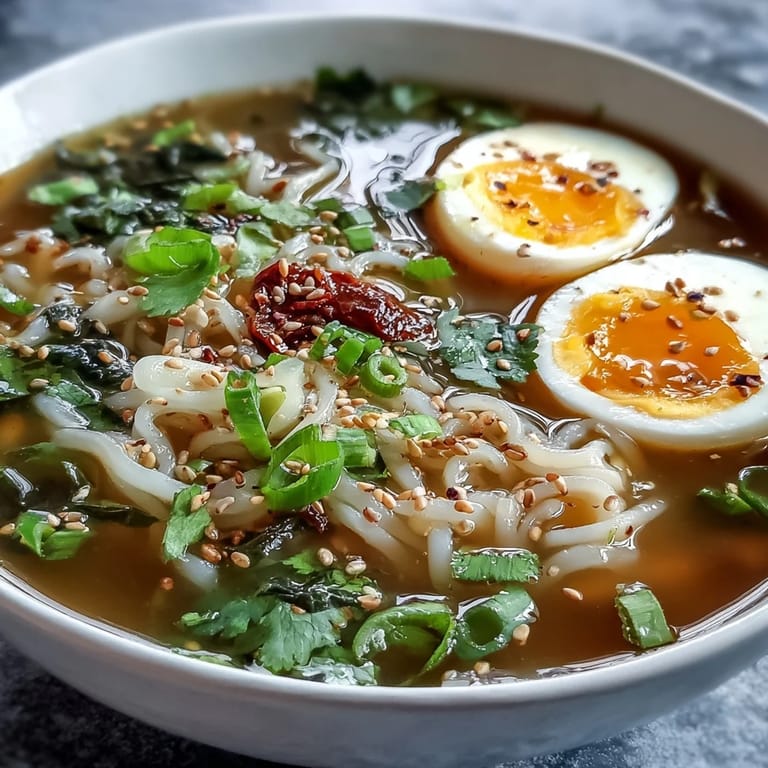
- Shirataki noodles (400 g, drained and rinsed): They smell funky straight from the package, so rinsing properly is the step everyone needs to hear about.
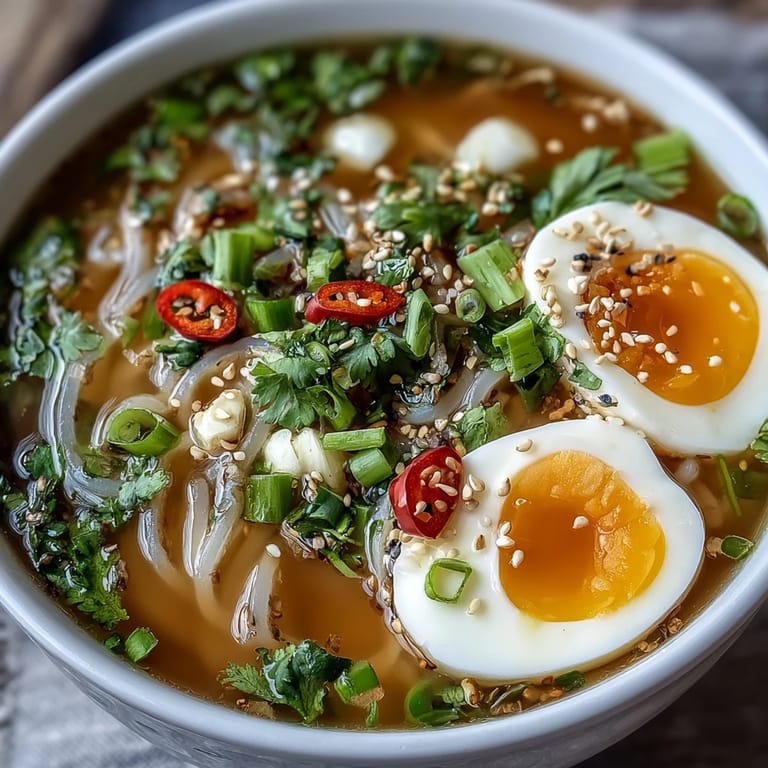
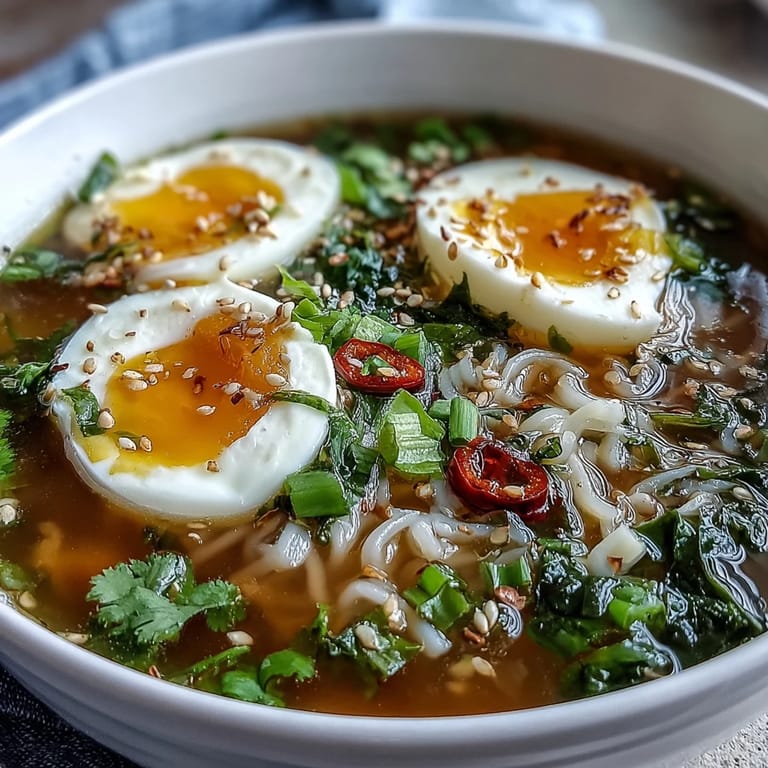
- Soft-boiled eggs, spring onion, fresh chili, herbs, and sesame seeds: These toppings are optional but they're where you get to make it feel like yours.
Tired of Takeout? 🥡
Get 10 meals you can make faster than delivery arrives. Seriously.
One email. No spam. Unsubscribe anytime.
Instructions
- Build your broth base:
- Pour the bone broth into a medium pot and add the sliced ginger, smashed garlic, soy sauce, rice vinegar, and sesame oil all at once. Bring it to a gentle boil over medium heat—you want to see little bubbles breaking the surface, not an aggressive rolling boil.
- Let flavors marry:
- Once it reaches a boil, drop the heat down and let it simmer quietly for 10 minutes. Walk away, breathe in what's happening, and let the ginger and garlic whisper themselves into every drop.
- Prepare the noodles properly:
- While that's happening, drain your shirataki noodles and rinse them thoroughly under cold running water—this is the step that matters. Place them in a sieve and pour a kettle of boiling water over them to strip away that funky smell that comes from the package.
- Introduce noodles to broth:
- Add the drained noodles to the simmering broth and let them warm through for 2 to 3 minutes. You're not cooking them—they're already done—just letting them absorb the warmth and flavor.
- Finish and serve:
- Fish out the ginger slices and garlic cloves if you want a cleaner bowl, though some people prefer leaving them in. Divide everything between two bowls and crown each one with your toppings.
 Save to Pinterest
 There was a morning when I made this for myself after a restless night, and somewhere between the first sip and finishing the bowl, I felt genuinely restored. It wasn't the nutrition—though that mattered—it was the fact that something so gentle and simple could make me feel entirely taken care of. That's when I realized this recipe had become less about what it wasn't and more about what it genuinely was.
Why Broth Matters More Than You'd Think
The broth is doing almost all the work here, so don't treat it as interchangeable. A weak broth will leave you with hot water and noodles, while a rich one transforms the same ingredients into something that tastes like someone spent hours caring for it. If you make your own bone broth, that thirty-second moment of smelling it simmering in the pot becomes part of the meal itself.
Making This Feel Like Your Own
The beauty of this bowl is that it invites customization without demanding it. Some days I add shredded chicken or soft tofu, other times I layer in sautéed bok choy or mushrooms that have soaked up the broth's essence. The fundamentals stay steady while everything else is negotiable, which is exactly how comfort food should work.
Small Details That Actually Matter
Slicing your ginger and smashing your garlic instead of mincing them changes how they release into the broth—it's gentler and more elegant. The soft-boiled egg is worth the effort because the moment that warm yolk breaks into the broth is a small celebration happening in your bowl. Toast your sesame seeds in a dry pan for thirty seconds right before serving, and suddenly everything tastes more intentional.
- Keep your bone broth at a gentle simmer, not a rolling boil, so nothing gets harsh or bitter.
- If you're making this vegetarian, a deeply flavored mushroom broth works beautifully in place of bone broth.
- Always have a kettle of boiling water ready when you rinse the shirataki noodles—it truly makes the difference.
 Save to Pinterest
 This bowl exists in that rare space where health and comfort stop being opposites and become the same thing. Make it when you need warmth, clarity, and the reminder that simple done well beats complicated done carelessly.
Recipe Questions & Answers
- → What do shirataki noodles taste like?
Shirataki noodles have a very mild, neutral taste that readily absorbs the flavors of the broth and seasonings. Their texture is slightly gelatinous and smooth, making them perfect for soaking up rich, savory liquids like bone broth.
- → Do I need to cook shirataki noodles?
Shirataki noodles come pre-cooked and只需要 rinsing thoroughly to remove any natural odor. Simmering them in the broth for 2-3 minutes helps heat them through and allows them to absorb the aromatic flavors.
- → Can I make this vegetarian?
Absolutely. Simply substitute the bone broth with a high-quality vegetable broth and either omit the eggs or replace them with seasoned tofu cubes for protein.
- → How do I store leftovers?
Store the noodles and broth separately in airtight containers in the refrigerator for up to 3 days. Reheat the broth until piping hot, then add the noodles just before serving to prevent them from becoming too soft.
- → What makes this dish low-carb?
Shirataki noodles are made from konjac yam and contain virtually zero carbohydrates or calories. Combined with the protein-rich bone broth and minimal added seasonings, this entire bowl contains only 3g of carbohydrates per serving.