 Save to Pinterest
 There's something about the sizzle of chicken hitting a hot wok that makes me stop whatever I'm doing. Years ago, a friend brought over leftover rice noodles and a bottle of fish sauce, and we spent a Saturday afternoon building bowls instead of following a recipe. That afternoon taught me that the best meals often come together when you have good ingredients and even better company. This Asian chicken noodle bowl became our default dinner whenever we wanted something that tasted like we'd tried much harder than we actually had.
I made this for my partner on a Tuesday when neither of us felt like leaving the house, and we ate straight from the bowls while watching something mindless. The kitchen smelled incredible—ginger, sesame, a hint of char from the chicken—and suddenly that ordinary evening felt like a small celebration. It's become our go-to when we need comfort that doesn't require ordering out or spending an hour in the kitchen.
Ingredients
- Boneless, skinless chicken breast or thighs (500 g): Thighs stay juicier, but breasts are leaner; slice them thin so they cook through quickly and absorb the marinade.
- Tamari or low-sodium soy sauce (3 tbsp): Tamari is gluten-free and slightly deeper in flavor, but either works—this is your umami anchor.
- Fish sauce (1 tbsp): Don't skip it out of fear; it dissolves into the sauce and adds a savory depth you can't replicate any other way.
- Rice vinegar (2 tbsp): Brings brightness and prevents the sauce from feeling too heavy or sweet.
- Honey (1 ½ tbsp): Balances the salty-savory elements and helps the sauce coat the noodles beautifully.
- Toasted sesame oil (2 tbsp): Use the real thing, not the clear stuff; the toasted version has a nutty flavor that's essential here.
- Neutral oil (2 tbsp): This keeps the sesame oil from burning in the hot pan and prevents sticking.
- Garlic and ginger (3 cloves and 1 tsp): Freshly minced or grated; they're what make this taste authentically aromatic rather than flat.
- Chili flakes or Sriracha (1 tsp optional): Add this if you want heat, or skip it entirely and let diners control their own spice level.
- Dried rice noodles (250 g): They're delicate, so rinse them cold after cooking so they don't clump together.
- Fresh vegetables (carrot, cucumber, bell pepper, spring onions, bean sprouts): Julienne and slice thin so they stay crisp and let you taste each one individually.
- Fresh cilantro (2 tbsp) and toasted sesame seeds: These finish the bowl with color and texture that makes it feel restaurant-quality.
- Lime wedges: The final squeeze lifts everything and ties the whole bowl together.
Tired of Takeout? 🥡
Get 10 meals you can make faster than delivery arrives. Seriously.
One email. No spam. Unsubscribe anytime.
Instructions
- Make the sauce foundation:
- Whisk together tamari, fish sauce, rice vinegar, honey, sesame oil, neutral oil, minced garlic, and ginger in a medium bowl. This is the moment everything comes into focus—you'll see the color deepen and smell the aromatics wake up. Split the mixture in half right away; one half marinating the chicken, the other reserved for drizzling at the end.
- Marinate the chicken:
- Add your sliced chicken to half the sauce and let it sit for 15 minutes while you prep everything else. Those 15 minutes aren't just for flavor; they let the chicken relax and cook more evenly.
- Cook the noodles:
- Boil rice noodles according to package instructions, then drain and rinse under cold water until they're completely cool and separated. This step prevents them from turning into a clumpy mess.
- Sear the chicken:
- Heat a large skillet or wok over medium-high heat and add the marinated chicken in a single layer. Let it sit undisturbed for 2 minutes so it develops a light golden crust, then stir and cook another 3–5 minutes until cooked through. You'll know it's ready when it's no longer pink inside and the edges have color.
- Build your bowls:
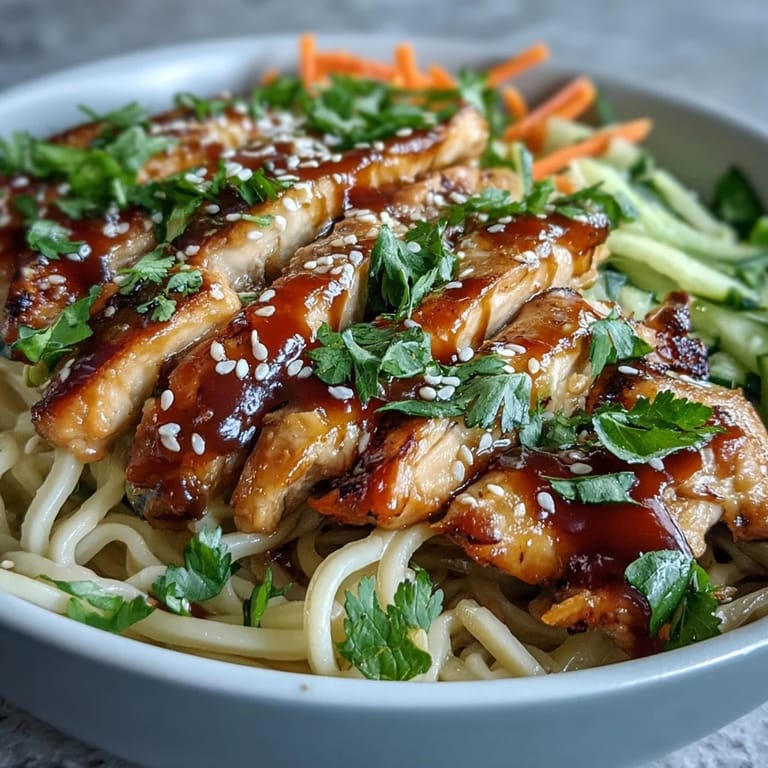
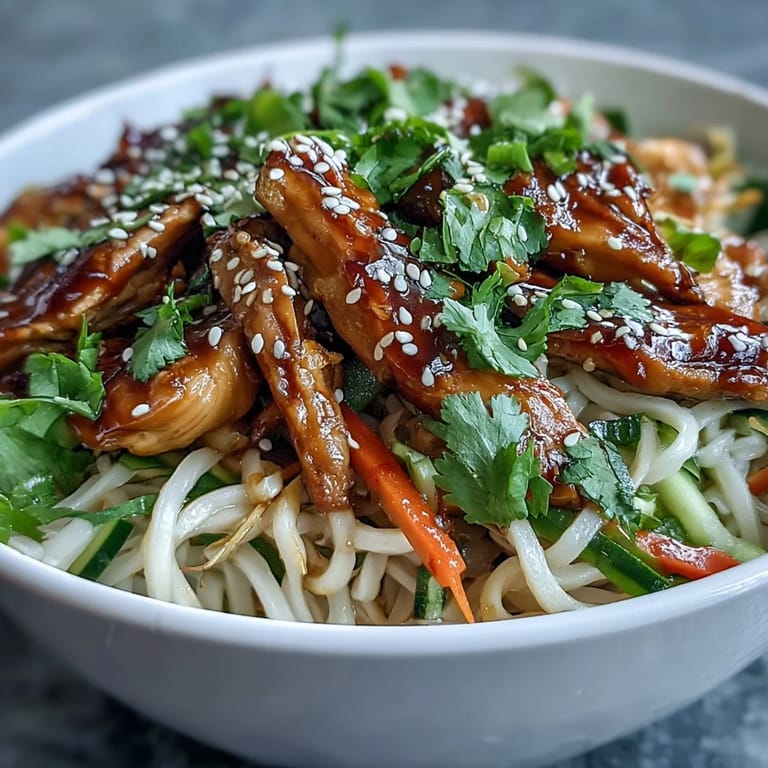
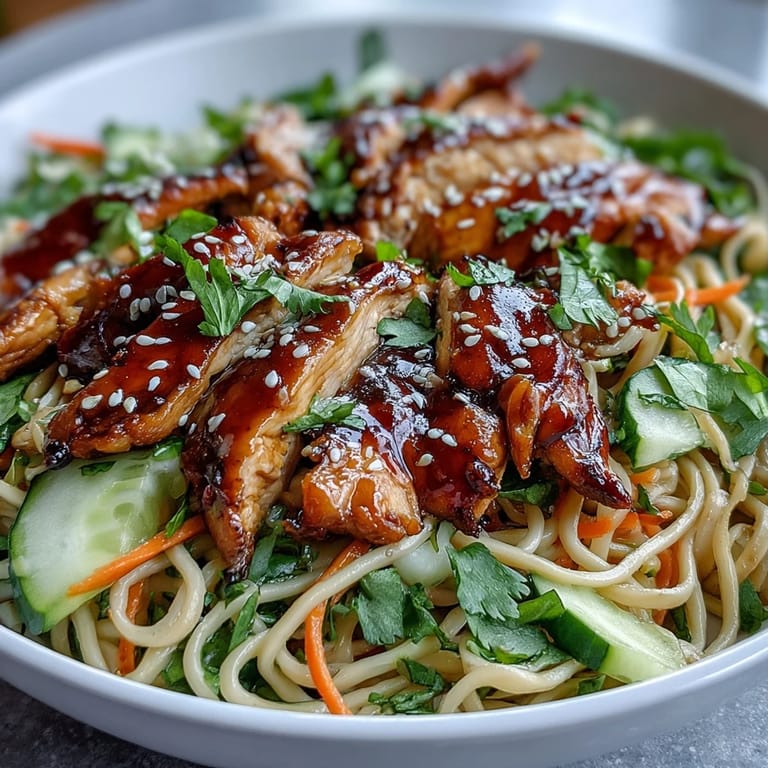
- Divide the cooled noodles among four bowls, then arrange the warm chicken and all your fresh vegetables on top in sections. The contrast of warm noodles and chicken against cool, crisp vegetables is exactly what makes this bowl sing.
- Finish and serve:
- Drizzle the reserved sauce over everything, scatter cilantro and sesame seeds on top, and finish with a squeeze of lime juice. Serve immediately while the chicken is still warm and the vegetables are still crisp.
 Save to Pinterest
 I've served this to people who claim they don't like fish sauce, and without fail they ask for the recipe. Something about how the marinade cooks into the chicken makes skeptics into believers. It's the kind of dish that proves you don't need complicated techniques to make something that tastes intentional and complete.
The Secret Sauce Strategy
Splitting the sauce into two halves is the move that changes everything. One half does double duty—it marinates the chicken while you prep vegetables, infusing flavor without adding extra steps. The other half stays fresh and uncooked, so it drizzles over the finished bowl with brightness and intensity that a cooked sauce would lose. This method means you're not spending more time in the kitchen; you're just being strategic about timing.
Vegetable Prep and Texture
The vegetables in this bowl matter because their texture and brightness balance the richness of the sauce and chicken. Julienne that carrot thin so it stays delicate, slice the cucumber paper-thin, and make sure the bean sprouts are as crisp as possible. I learned this by overloading a bowl with chunky vegetables once and ending up with something that felt heavy instead of refreshing. The thin cuts also mean everything absorbs just enough sauce without getting soggy.
Building Your Bowl
There's actually an art to how you arrange a noodle bowl, even though it looks casual. Start with noodles as your base, then arrange the warm chicken in the center where it stays warm, and position all the cool vegetables around the edges where their texture stays intact. The way the elements are organized means each spoonful can include noodles, chicken, and vegetables in different combinations, keeping the eating experience interesting from start to finish.
- Don't mix everything together; let each person customize their bite by choosing which elements to combine.
- Serve the lime wedges and extra chili flakes on the side so people can adjust to their taste.
- If you're prepping ahead, keep the sauce and vegetables separate until just before serving so everything stays fresh.
 Save to Pinterest
 This bowl tastes like organized chaos in the best way—intentional flavors that somehow feel effortless when you sit down to eat. Make it once and you'll understand why it became our weeknight default.
Recipe Questions & Answers
- → Can I make this dish ahead of time?
Prepare the sauce and marinate chicken up to 24 hours in advance. Cook vegetables and noodles fresh for best texture, though leftovers keep well for 2-3 days when refrigerated.
- → What type of noodles work best?
Rice noodles are traditional and gluten-free, but wheat noodles, soba, or even udon work beautifully. Choose noodles that hold their texture well when tossed with sauce.
- → How can I make it vegetarian?
Replace chicken with firm tofu cubes and use vegetarian fish sauce or additional tamari. The marinade and sauce work perfectly with plant-based proteins.
- → Can I adjust the spice level?
Absolutely. Start with minimal chili flakes, then add Sriracha at the table. For more heat, increase chili flakes in the sauce or serve with sliced fresh chilies.
- → What vegetables can I add?
Snap peas, edamame, shredded cabbage, or bok choy make excellent additions. Use whatever crisp vegetables you have on hand for added crunch and nutrition.
- → Is the sauce gluten-free?
Yes, when using certified gluten-free tamari instead of soy sauce and ensuring your rice noodles are labeled gluten-free. Always check sauce labels if you have celiac concerns.