 Save to Pinterest
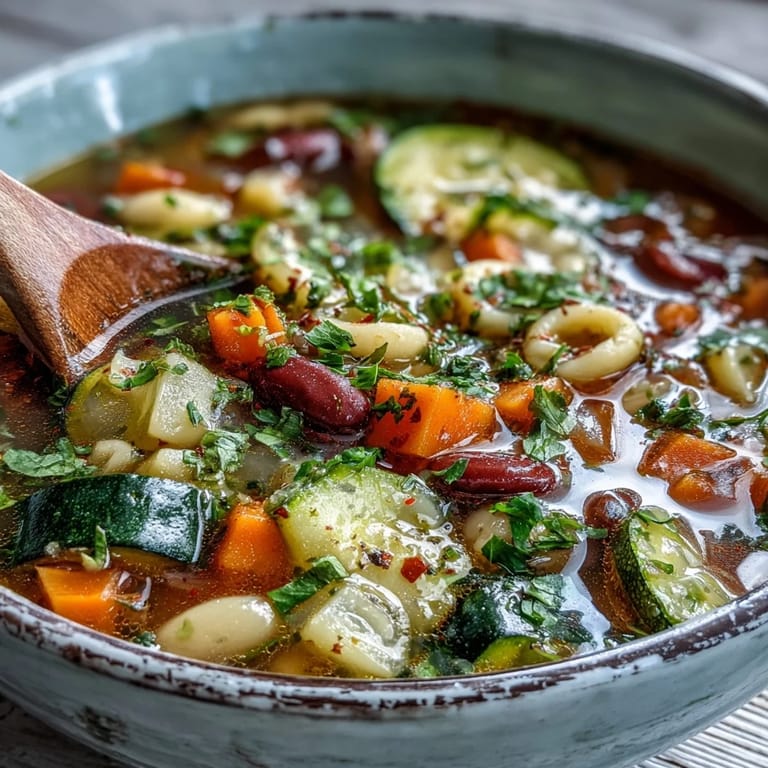
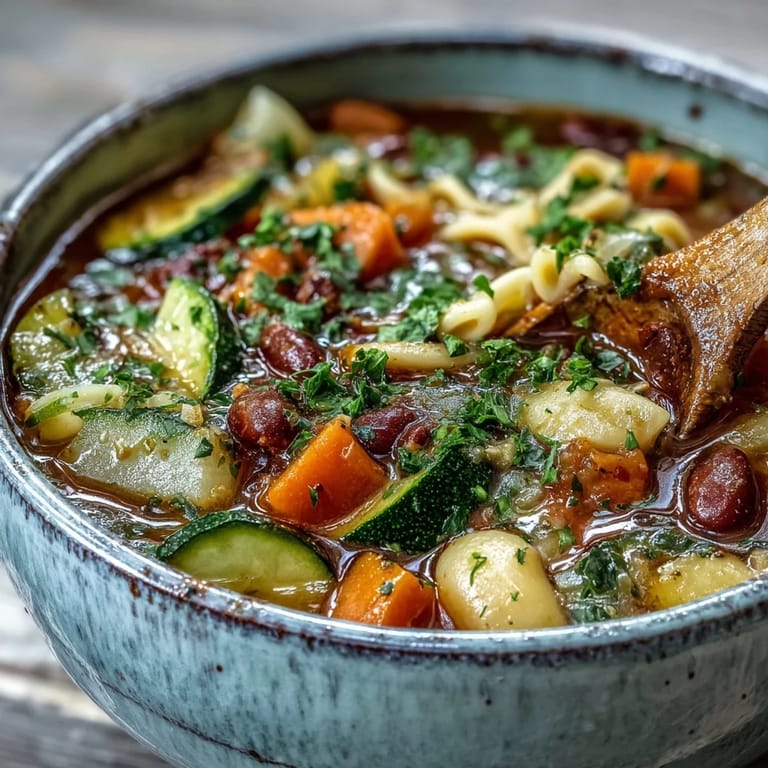
 There's something magical about the way minestrone fills your kitchen with warmth on a chilly afternoon, the kind of smell that makes you pause whatever you're doing and just breathe it in. I discovered this soup wasn't about perfection or following rules too strictly, but about opening your pantry and using what the season handed you. My neighbor Maria once told me that her grandmother made minestrone differently every single time, and that was the whole point. It taught me that soup doesn't need to be complicated to be deeply satisfying.
I made this soup one October evening when friends dropped by unexpectedly, and I had maybe forty minutes to work with. The result was so hearty and honest that everyone asked for the recipe, which surprised me because I'd just grabbed whatever vegetables were lingering in my crisper drawer. That's when I realized minestrone isn't a recipe you nail down, it's a conversation you have with your ingredients.
Ingredients
- Olive oil: Use a good quality oil here since it's one of the first flavors you'll taste, and it helps build the foundation for everything that follows.
- Onion, carrots, and celery: These three are your flavor base, and taking five full minutes to soften them properly makes a real difference in how the whole soup develops.
- Garlic: Add it after the softer vegetables so it doesn't burn and turn bitter while you're building layers of flavor.
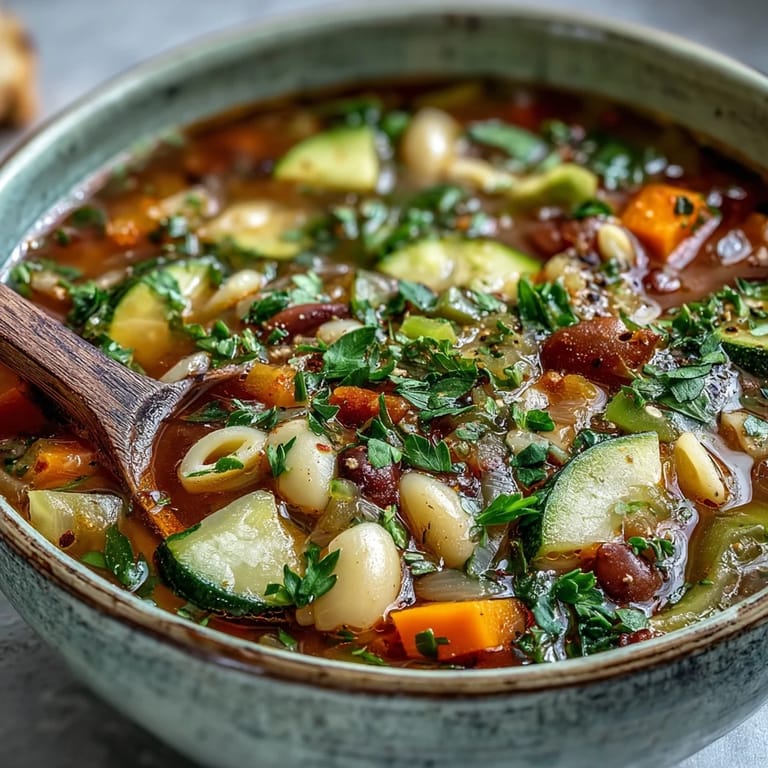
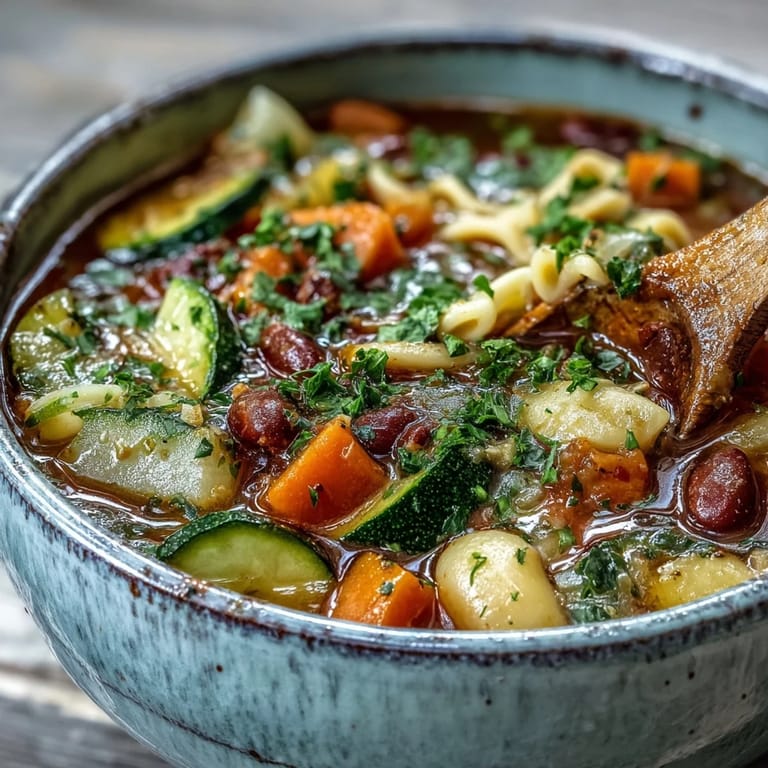
- Zucchini or butternut squash: Summer calls for zucchini's lightness, winter demands squash's sweetness, so let the season guide you here.
- Green beans or hearty greens: Fresh green beans brighten the soup, but kale or spinach in colder months adds earthiness and nutrition.
- Diced tomatoes: Canned tomatoes are actually your friend here because they're picked at peak ripeness and concentrated in flavor.
- Potato: Optional, but it adds body and makes the soup more filling without needing cream.
- Vegetable broth: This is where quality really shows, so use something you'd actually taste on its own.
- Cannellini or borlotti beans: Rinsing canned beans removes excess sodium and gives you cleaner, brighter results.
- Small pasta: Ditalini or elbow pasta disappears into the broth beautifully, but use what you have on hand.
- Bay leaf, oregano, and basil: These Italian herbs are the soul of minestrone, so don't skip them even if you're tempted.
- Fresh parsley: Stir some in at the end and scatter more on top just before serving for brightness and freshness.
- Parmesan cheese: Optional for serving, but a generous handful adds richness and keeps the dish completely satisfying.
Tired of Takeout? 🥡
Get 10 meals you can make faster than delivery arrives. Seriously.
One email. No spam. Unsubscribe anytime.
Instructions
- Build your flavor foundation:
- Heat the olive oil in a large pot and add your diced onion, carrots, and celery, letting them soften together for about five minutes. You'll know they're ready when the onion turns translucent and the whole mixture smells sweet and inviting.
- Add freshness and character:
- Stir in your minced garlic along with whatever seasonal vegetables you've chosen, cooking for just three minutes until everything becomes fragrant. This step is quick because you want these ingredients to stay vibrant and not lose their texture.
- Bring in the body:
- Add your canned tomatoes and diced potato if you're using it, along with a bay leaf, letting these simmer together for two minutes before pouring in your broth. This brief cooking time lets the tomatoes infuse the oil without making anything mushy.
- Develop the broth:
- Bring everything to a boil, then immediately turn the heat down and let it simmer gently for fifteen minutes. The soup will smell increasingly complex as the vegetables break down and release their flavors into the broth.
- Finish strong:
- Add your drained beans and pasta, stirring them in gently and letting them cook uncovered for about ten to twelve minutes until the pasta is tender and the beans are heated through. Taste it here and season generously with oregano, basil, salt, and pepper, then fish out that bay leaf.
- Add the final touch:
- Stir in your fresh parsley just before serving, which brings a burst of brightness and makes the whole soup feel less like comfort food and more like celebration. Ladle it into bowls and finish with grated Parmesan if you'd like that savory richness on top.
 Save to Pinterest
  Save to Pinterest
 I learned something important watching my friend's grandmother make this soup, which is that minestrone is about generosity. She kept tasting and adjusting, never apologizing for the simplicity of the ingredients, because she knew that the care in the cooking was what mattered. That shift in perspective changed how I approach soups entirely.
Adapting With the Seasons
Spring begs for lighter additions like peas, young leeks, and tender asparagus, which cook quickly and taste fresh. Summer is your moment for zucchini, fresh green beans, and maybe some corn, all of which provide brightness and don't need much time to soften. Fall and winter are when you reach for butternut squash, kale, cabbage, and root vegetables that hold their shape and add sweetness as they cook down.
The Vegan Swap
Making this vegetarian is simple since beans and pasta already provide substance and protein, but going fully vegan just means skipping the Parmesan or using a dairy-free alternative if you want that savory topping. The soup stands completely on its own without any cheese, so don't feel like you're missing anything if that's the route you choose.
Serving and Storage Wisdom
Minestrone tastes best served hot with a thick slice of crusty bread alongside and a generous drizzle of your best olive oil stirred in just before eating. Leftovers keep beautifully in the refrigerator for about four days, and the pasta will absorb more broth as it sits, making tomorrow's bowl even more flavorful and satisfying.
- If you're making this ahead, cook the pasta just until barely tender since it will continue softening as the soup cools and sits.
- Store the soup and Parmesan separately so the cheese doesn't get lost or soggy in the leftovers.
- Freeze individual portions in containers for up to three months, and the soup will taste just as good when you need quick comfort.
 Save to Pinterest
  Save to Pinterest
 This soup reminds me that cooking doesn't require fancy techniques or rare ingredients, just attention and a willingness to adapt. It's the kind of meal that brings people together without any fuss, and that's exactly why it deserves a place on your regular dinner rotation.
Recipe Questions & Answers
- → Can I make this minestrone ahead of time?
Yes, minestrone keeps well for 3-4 days refrigerated. Store in an airtight container. Note that pasta will absorb liquid over time, so you may need to add extra broth when reheating.
- → What vegetables work best in different seasons?
In summer, use zucchini, green beans, and fresh tomatoes. For winter, swap to butternut squash, kale, cabbage, or root vegetables. Spring calls for peas, asparagus, and leeks. Choose what's freshest at your market.
- → Can I freeze vegetable minestrone?
You can freeze this soup for up to 3 months, but it's best to cook the pasta separately and add it when serving. Pasta can become mushy after freezing and thawing.
- → How can I make this soup heartier?
Add more beans, include diced potatoes, use larger pasta shapes, or stir in torn crusty bread near the end of cooking. You can also add cooked sausage or pancetta for a non-vegetarian version.
- → What's the best pasta shape for minestrone?
Small shapes like ditalini, elbow macaroni, small shells, or tubetti work best. They're easy to eat with a spoon and cook evenly in the broth. Avoid long pasta like spaghetti.
- → How do I prevent the vegetables from getting mushy?
Add vegetables in stages based on cooking time. Harder vegetables like carrots go in first, while delicate greens like spinach should be added in the last few minutes. Don't overcook.