 Save to Pinterest
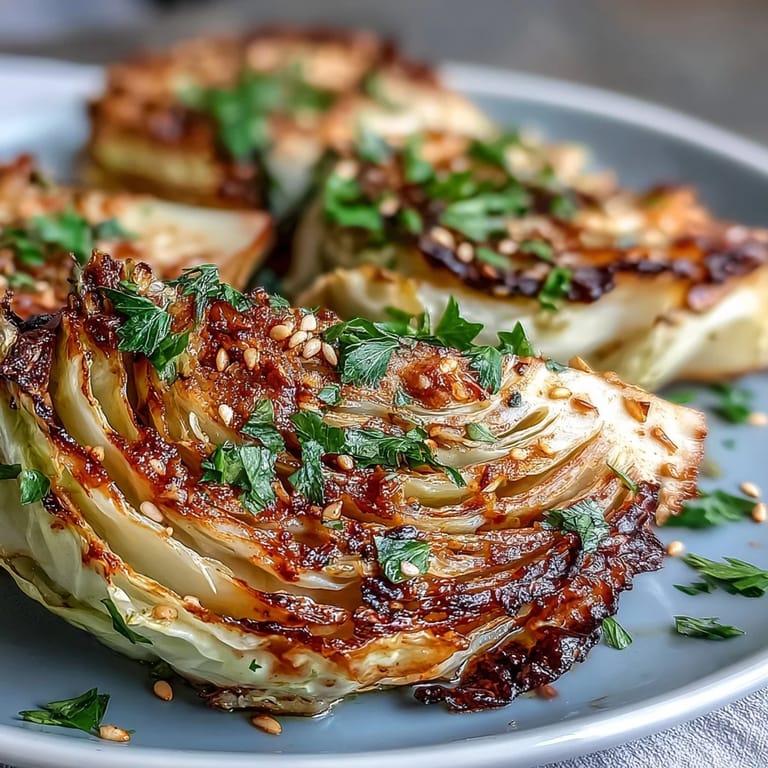
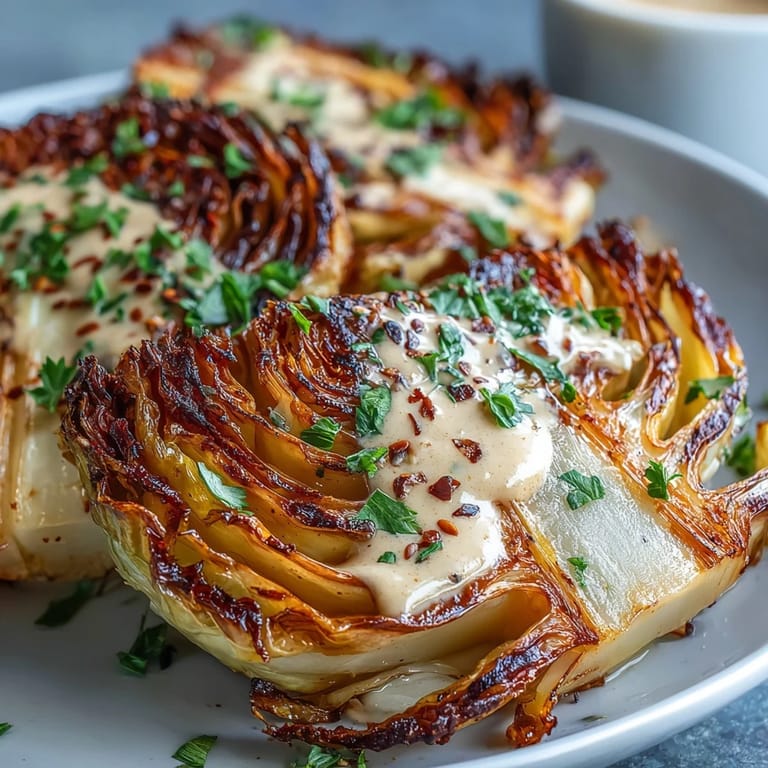
 My neighbor knocked on my door one Tuesday evening with a head of cabbage in hand, insisting I stop roasting vegetables the same old way. She'd discovered these golden-edged cabbage steaks draped in tahini at some pop-up market, and couldn't stop thinking about them. I was skeptical—cabbage, really?—but that first bite of caramelized leaves with the creamy sesame drizzle changed something in how I approached weeknight cooking. It turns out the humble cabbage, when treated with intention and heat, becomes something almost luxurious.
I made these for my sister's potluck last spring, and they disappeared before the main dishes even arrived. People kept asking what they were eating, genuinely surprised when I said cabbage—not a single leaf remained on the platter. That moment of watching someone's face shift from curiosity to delight over something so simple and unpretentious felt like the best cooking victory.
Ingredients
- 1 large green cabbage: Look for one that feels dense and heavy, which means the leaves are tightly packed and will hold together beautifully when sliced. Avoid any with soft spots or browning.
- 3 tbsp olive oil: This is your vehicle for caramelization, so use something you actually enjoy tasting—extra virgin if you have it on hand.
- 1 tsp ground cumin: This brings an earthy warmth that makes people pause and wonder what's making the cabbage taste so alive.
- 1 tsp smoked paprika: The smoke adds depth and a hint of char flavor even before the oven does its magic.
- ½ tsp garlic powder: Don't skip this; it layers the savory notes without adding moisture that would steam the cabbage instead of roasting it.
- Salt and freshly ground black pepper, to taste: Season aggressively—cabbage needs it to shine.
- ⅓ cup tahini: The creamy backbone of your sauce; quality matters here since it's so prominent.
- 2 tbsp lemon juice, freshly squeezed: Fresh juice brightens the tahini and keeps it from feeling heavy; bottled won't give you the same sparkle.
- 1 small garlic clove, finely minced: Raw garlic adds bite to balance the richness; go light if you're serving this to someone sensitive to raw garlic heat.
- 2–4 tbsp cold water: Add gradually to get the sauce to the consistency you want—it should flow but not be runny.
- 2 tbsp chopped fresh parsley: The final brightness that makes every bite feel intentional and fresh.
- 2 tbsp toasted sesame seeds, optional: If you use them, they add a subtle nuttiness and beautiful visual texture.
- Lemon wedges: For squeezing tableside, giving people control over their own brightness.
Tired of Takeout? 🥡
Get 10 meals you can make faster than delivery arrives. Seriously.
One email. No spam. Unsubscribe anytime.
Instructions
- Heat your oven and prep your stage:
- Preheat to 425°F and line a baking sheet with parchment paper. This temperature is hot enough to caramelize but not so aggressive that the cabbage dries out before it softens.
- Slice your cabbage steaks:
- Remove any tough or yellowed outer leaves, then carefully slice the cabbage into 1-inch thick rounds. You're aiming for 4–5 steaks that hold together like little rounds, not falling apart into individual leaves.
- Oil and season with intention:
- Lay the steaks on the sheet, brush both sides with olive oil (the oil is what creates that gorgeous browning), then sprinkle your spice blend over everything. The cumin, paprika, and garlic powder should coat evenly—this is where your flavor lives.
- Let them transform in the oven:
- Roast for 25–30 minutes, flipping halfway through. Watch for the edges to deepen to golden brown and the centers to become fork-tender. The caramelization is real and worth waiting for.
- Build your tahini sauce while they cook:
- In a bowl, whisk tahini with lemon juice, minced garlic, and a pinch of salt. The mixture will seize up at first—this is normal. Add cold water one tablespoon at a time, whisking until you reach a pourable consistency that clings to the back of a spoon.
- Bring it all together:
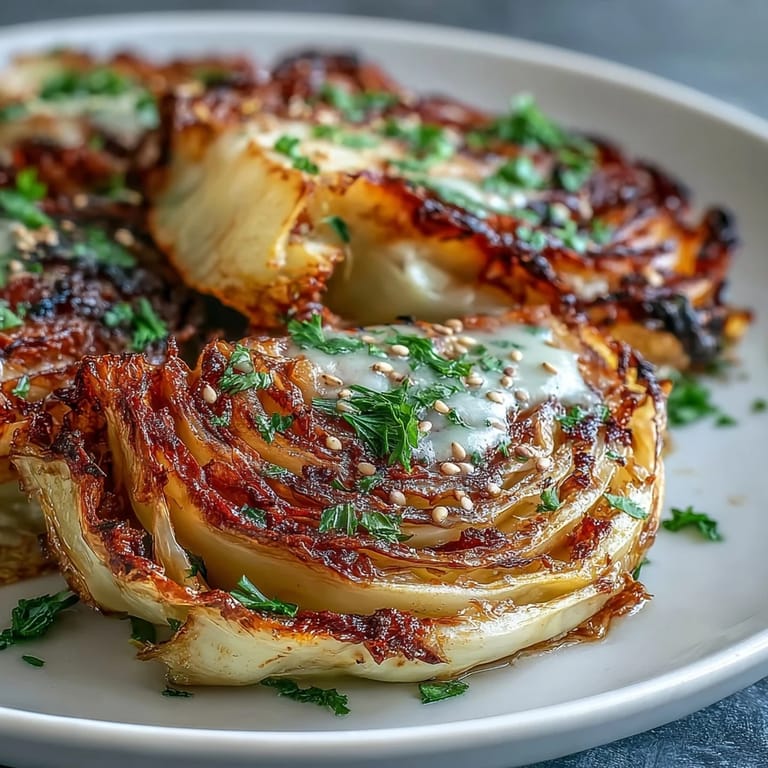
- Transfer the warm cabbage steaks to a platter and drizzle generously with your tahini sauce. The warmth of the cabbage will meld beautifully with the cool sauce.
- Finish with care:
- Top with fresh parsley, sesame seeds if using, and serve with lemon wedges so people can adjust the brightness to their taste.
 Save to Pinterest
 There's a quiet satisfaction in serving something so nourishing that doesn't need an apology or explanation. My dad, who thinks vegetables are background characters, came back for seconds and asked me to write down what I did. That's when I knew this wasn't just a recipe—it was a dish with staying power.
Roasting: The Secret to Cabbage Magic
The oven does the heavy lifting here, transforming raw cabbage's sulfurous potential into something almost sweet. High heat caramelizes the natural sugars in the leaves while the spices bloom and deepen. The edges get crispy-edged while the interior stays tender—it's that textural contrast that makes people keep reaching back to the platter. If you've only ever had cabbage steamed or in slaws, this will reset your expectations entirely.
The Tahini Equation
Tahini can feel intimidating because it's so concentrated and can seize into a grainy mess if you're not careful. The trick is respecting that it wants to stay thick, then coaxing it to smoothness with lemon juice and water in small, whisked increments. Once it comes together, you have a sauce that's rich without being heavy, nutty without being aggressive. It's forgiving enough to make ahead and thin to your preferred consistency—if it tightens up in the fridge, add a splash more water and whisk again.
Serving Suggestions and Smart Swaps
This works as a standalone main with grains, or as an elegant side to grilled fish or roasted tofu. In warmer months, I'll serve it at room temperature with a grain salad; in winter, warm and steaming feels more right. The beauty is in its flexibility—it plays well with others but doesn't need backup. Try these small tweaks to keep it interesting:
- Add a pinch of chili flakes or zaatar to the cabbage before roasting for extra depth and heat.
- Swap the parsley for cilantro or mint depending on what feels right that day.
- Drizzle with pomegranate molasses instead of—or alongside—the tahini for brightness and tang.
 Save to Pinterest
 This dish has become my answer to the question of what to make when I want to feel like I cooked something meaningful but didn't want to spend hours doing it. It's reliable, unfussy, and somehow always impressive.
Recipe Questions & Answers
- → How do I cut cabbage into steaks?
Trim off the root end, then slice the cabbage head crosswise into 1-inch thick rounds. Each slice should hold together like a steak, with the layers intact. You'll typically get 4-5 steaks from one large cabbage.
- → Can I make this ahead of time?
Roast the cabbage steaks up to a day in advance and store them in the refrigerator. Reheat at 400°F for 10 minutes to crisp the edges. Make the tahini sauce fresh and drizzle just before serving for the best texture.
- → Why is my tahini sauce clumping?
This happens when adding water too quickly. Whisk the tahini and lemon juice first until thick, then add cold water one tablespoon at a time, whisking continuously. The sauce will seize before smoothing out into a creamy consistency.
- → Can I use red cabbage instead?
Absolutely. Red cabbage works beautifully and adds vibrant purple color. Note that it may take slightly longer to become tender and the color will deepen during roasting. The flavor profile remains similar with a slightly earthier taste.
- → What other spices can I use?
Za'atar adds wonderful Middle Eastern flavors. Try adding chili flakes for heat, or coriander and turmeric for an earthier profile. Garlic powder can be swapped for onion powder. Season generously before roasting.
- → Is this dish freezer-friendly?
The roasted cabbage freezes well for up to 3 months. Flash-freeze the cooled steaks on a baking sheet before transferring to a freezer bag. Thaw overnight and reheat in a 400°F oven. The tahini sauce is best made fresh.