 Save to Pinterest
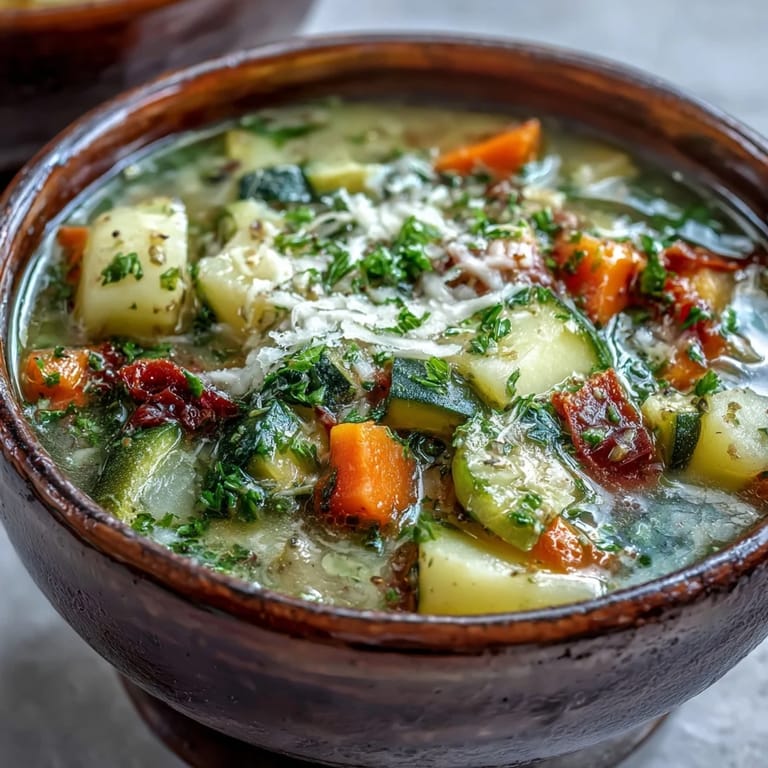
 My neighbor Maria stopped by one October afternoon with a container of her Parmesan vegetable soup, and I remember thinking how such a simple-sounding dish could smell so impossibly good. The kitchen filled with this warm, savory aroma that made me want to sit down immediately with a spoon. After tasting it, I understood the magic wasn't in exotic ingredients but in how the Parmesan created this silky, comforting richness that made every vegetable taste like it belonged in a proper Italian kitchen. I've been making versions of it ever since, and it's become the soup I reach for when I need something that feels both nourishing and a little bit fancy without any fuss.
I made this for my sister when she was going through a rough patch, and watching her face change from stressed to calm as she ate it taught me something about the quiet power of good food. She asked for the recipe that same evening, and now it's become our thing—whenever one of us needs to show up for the other, there's soup simmering on the stove.
Ingredients
- Olive oil: Just enough to coat the pot and let your aromatics release their flavor without browning them too much.
- Onion, garlic, carrots, and celery: This is your flavor foundation, and taking a moment to chop them evenly means they'll cook at the same pace and create a balanced base.
- Zucchini, potato, and green beans: Each one brings different textures and keeps the soup interesting from the first spoonful to the last.
- Diced tomatoes: Use canned—they're picked at peak ripeness and give you consistent acidity and sweetness without any of the work.
- Vegetable broth: This is where your soup gets its soul, so choose one you actually like the taste of on its own.
- Freshly grated Parmesan cheese: The real thing makes a difference; the pre-grated versions sometimes have additives that keep them from melting as beautifully.
- Parmesan rind: This optional treasure is like finding money in your coat pocket—if you have one, toss it in for deep, nutty depth that intensifies everything around it.
- Dried Italian herbs: A blend of basil, oregano, and thyme, or use what you have; these are forgiving and honest.
- Salt and pepper: Taste as you go, because every broth is different and seasoning is a conversation, not a set rule.
- Fresh parsley: Added at the end, it brings brightness and reminds you that this soup is alive and vibrant.
Tired of Takeout? 🥡
Get 10 meals you can make faster than delivery arrives. Seriously.
One email. No spam. Unsubscribe anytime.
Instructions
- Wake up your aromatics:
- Pour the olive oil into a large pot over medium heat and let it warm for just a moment. Add your chopped onion and minced garlic, then listen—within about two minutes, you'll hear a gentle sizzle and catch that unmistakable smell of onion turning sweet and soft.
- Build your vegetable base:
- Add the carrots, celery, zucchini, potato, and green beans all at once and let them cook for about five minutes, stirring now and then. You're not trying to cook them through yet; you're just waking them up and letting them get to know each other.
- Bring it all together:
- Pour in your tomatoes with all their juice, the vegetable broth, your dried herbs, salt, and pepper. If you've got a Parmesan rind, nestle it in there—it'll add a whisper of umami that you won't be able to identify but will absolutely notice.
- Let it simmer gently:
- Bring everything to a gentle boil, then turn the heat down so it's just barely bubbling. Cover it and let it cook for 25 to 30 minutes, until all your vegetables are tender and the kitchen smells like comfort itself.
- Make it creamy:
- Fish out the Parmesan rind if you used one, then add your grated cheese while the soup is still hot. Stir it in slowly and watch as it melts and creates this silky, rich texture that coats the back of your spoon.
- Taste and adjust:
- This is the moment where you become the cook instead of just following orders—add more salt or pepper if it needs it, taste it again, and feel proud that you made something this good.
- Serve it hot:
- Ladle the soup into bowls, finish each one with a scatter of fresh parsley and a handful of extra Parmesan, and watch people's faces as they taste it.
 Save to Pinterest
 There's a moment about halfway through cooking when you lift the lid and the steam hits your face and you realize you've made something that smells like a real kitchen, like someone knows what they're doing. That moment is the whole reason to cook.
Ways to Make It Your Own
The beauty of this soup is that it's flexible without being flimsy. You can swap vegetables depending on what's in your crisper drawer—spinach added at the very end stays bright green, kale gets tender and dark, or even a handful of diced bell pepper brings sweetness. I've made it with ditalini pasta stirred in during the last ten minutes of cooking, and I've made it with white beans for extra protein when I knew I needed something more substantial. The foundation is strong enough that it can handle your variations.
Pairing and Serving Ideas
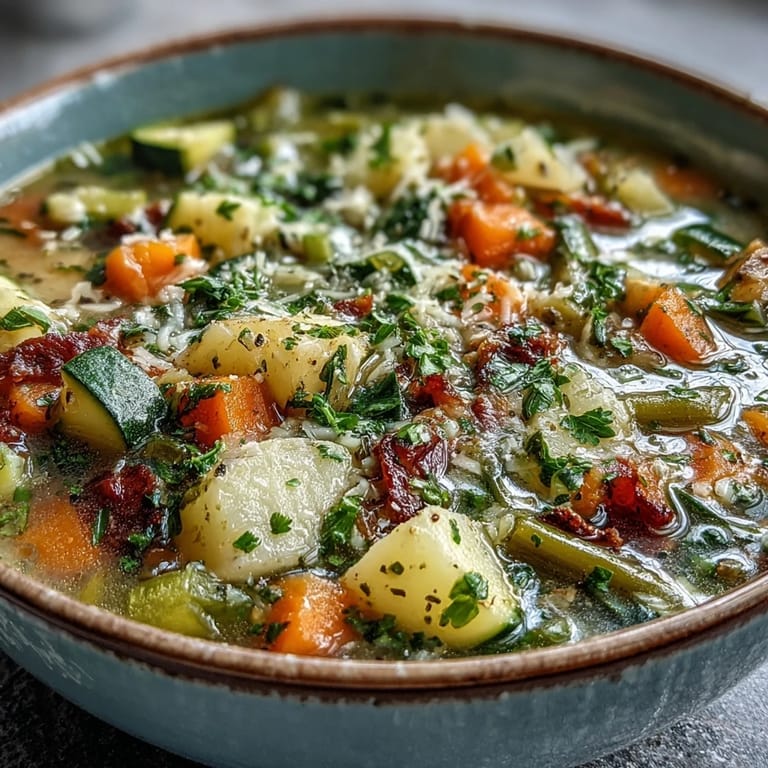
This soup doesn't ask for much, but it appreciates good company. A hunk of crusty bread for dipping turns it into a complete meal, or ladle it into bowls alongside a simple green salad if you want something lighter. I've served it in small cups at the beginning of a dinner party and watched it set the tone for a warm evening. It's equally happy being reheated on a Tuesday night when you're alone and need something that tastes like someone cares.
Storage and Leftovers
This soup keeps beautifully in the refrigerator for up to four days, and reheats gently on the stovetop without losing any of its personality. The vegetables do soften a bit more with time, but that's not a flaw—it makes the soup even cozier. I sometimes make a double batch specifically for freezing, though I leave the parsley off until I reheat it so everything stays fresh and bright.
- Cool the soup completely before refrigerating or freezing to avoid condensation and flavor loss.
- Thaw frozen soup in the refrigerator overnight, then reheat gently over medium heat until steaming.
- Add fresh parsley and extra Parmesan only when serving to keep flavors vibrant.
 Save to Pinterest
 This soup has become my answer to almost every kitchen question—when I want comfort, when I want to show someone I care, when I want to prove to myself that I can make something real. That feels like enough.
Recipe Questions & Answers
- → Can I use frozen vegetables instead of fresh?
Yes, frozen vegetables work well. Add them directly to the pot without thawing, though cooking time may need slight adjustment to ensure they're tender.
- → What can I substitute for Parmesan cheese?
Try Pecorino Romano for a sharper flavor, or use a plant-based Parmesan alternative for a dairy-free version. Nutritional yeast also adds a cheesy, umami flavor.
- → How do I store leftover soup?
Store in an airtight container in the refrigerator for up to 4 days. Reheat gently on the stovetop, adding a splash of broth if needed to thin the consistency.
- → Can I make this soup ahead of time?
Absolutely. This soup tastes even better the next day as flavors meld. Prepare fully, cool completely, then refrigerate. Reheat and add fresh Parmesan before serving.
- → What vegetables can I add or substitute?
Feel free to use bell peppers, spinach, kale, or cabbage. Seasonal vegetables like butternut squash or peas also work beautifully in this versatile soup base.
- → Can I freeze this soup?
Yes, freeze for up to 3 months in freezer-safe containers. Leave space for expansion. Thaw overnight in the refrigerator and reheat gently on the stovetop.