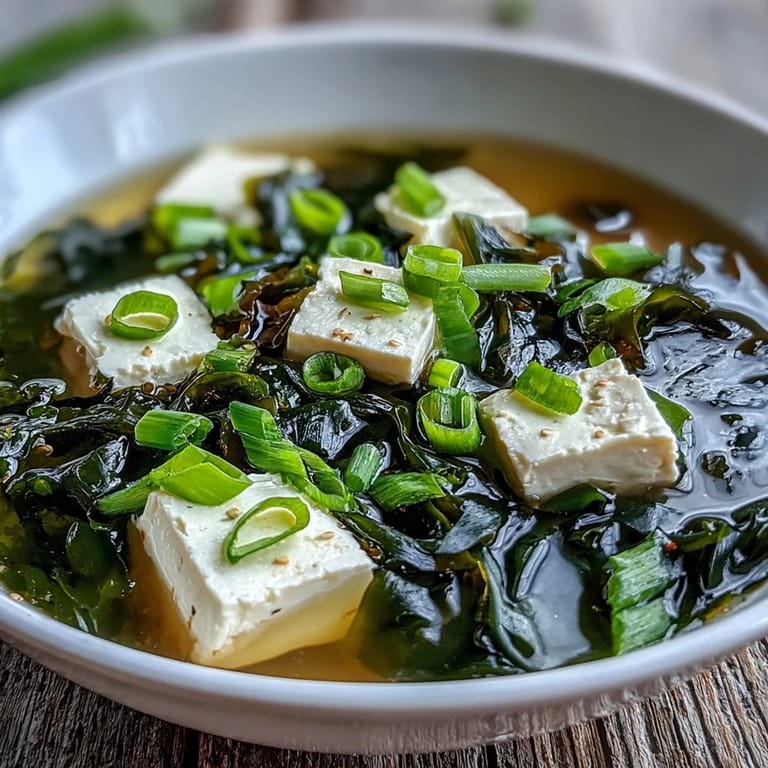
 Save to Pinterest
 My neighbor's grandmother taught me this soup on a quiet Tuesday morning when I stopped by with fresh eggs. She moved with such calm certainty, letting the wakame bloom in cold water while explaining that in Japan, this soup meant care—the kind served to people recovering, to expectant mothers, to anyone needing gentle nourishment. I watched steam rise from her pot and realized how something so simple could feel like a quiet conversation between two people.
Years later, I made this soup for a friend who'd just moved to a new city and felt unmoored. We sat in her almost-empty kitchen, and somewhere between the first spoonful and the second, her shoulders dropped. She asked me for the recipe before she asked for anything else that week—not because it was fancy, but because it reminded her that someone was thinking about what her body needed.
Ingredients
- Dried wakame seaweed (8 g): This rehydrates into tender ribbons full of minerals, and the 5-minute soak is all it needs—any longer and it gets mushy.
- Dashi stock (4 cups): The foundation of everything; vegetarian dashi made with kombu and shiitake tastes just as deep as the traditional version.
- Silken or firm tofu (100 g, cubed): Silken breaks apart into clouds, while firm holds its shape—pick based on the texture you're craving.
- Scallions (2, thinly sliced): These add a bright finish, and slicing them thin means they scatter across the surface like green confetti.
- White miso paste (2 tbsp): Never boil miso after adding it or the living cultures die; tempering it in hot broth first keeps that complexity alive.
- Soy sauce (1 tsp): A whisper of umami that ties everything together; gluten-free tamari works seamlessly if that matters to you.
- Sesame oil (1 tsp, optional): This is optional but it's worth the small drizzle—it adds a nutty whisper that makes people ask what's different.
Tired of Takeout? 🥡
Get 10 meals you can make faster than delivery arrives. Seriously.
One email. No spam. Unsubscribe anytime.
Instructions
- Wake up the wakame:
- Fill a small bowl with cold water and scatter the dried seaweed in—you'll watch it unfurl like it's been holding its breath. After 5 minutes, drain it gently and set it aside.
- Bring the dashi to life:
- Pour your stock into a medium saucepan and let it warm over medium heat until you see gentle bubbles breaking the surface. Don't let it roar; this soup is about quietness.
- Add the soft elements:
- Slide the cubed tofu and rehydrated wakame into the hot broth and let them simmer together for 2 to 3 minutes. The tofu will soften further and the wakame will fully integrate.
- Dissolve the miso carefully:
- In a separate small bowl, scoop out a ladle of hot broth and whisk the miso paste into it until completely smooth—no lumps. This prevents the miso from clumping when it hits the full pot.
- Return the miso to the soup:
- Pour the dissolved miso mixture back into the saucepan and stir gently. You'll immediately smell the difference—deeper, more complex, like something just clicked into place.
- Finish with restraint:
- Add soy sauce and sesame oil if you're using it, then give everything one gentle stir. Heat for 1 more minute without letting it boil, then remove from heat.
- Serve and garnish:
- Pour into bowls and scatter those thin scallion slices across the top. The heat will slightly wilt them and release their green sharpness.
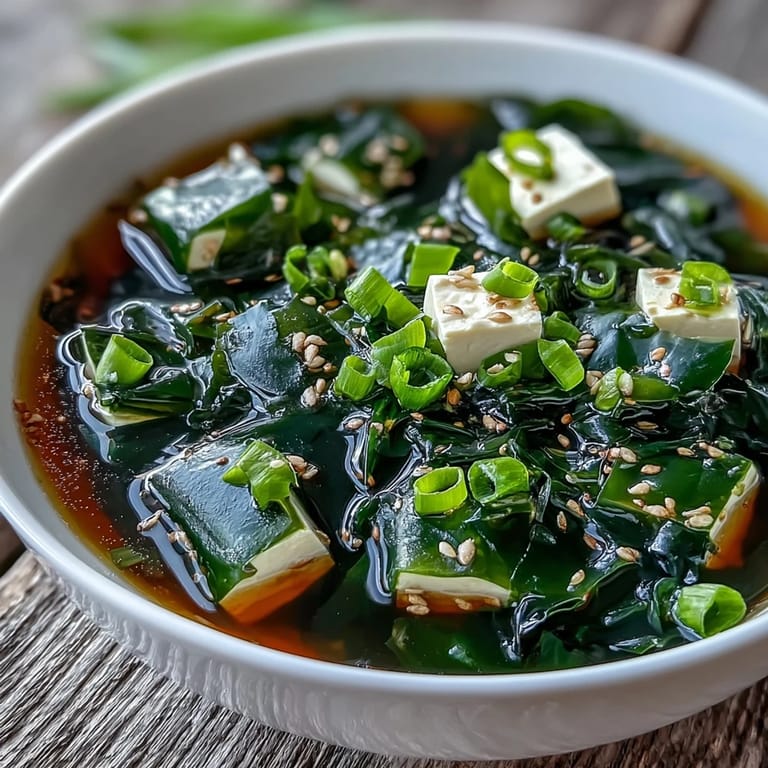 Save to Pinterest
 This soup became the thing I made when words weren't enough, when I wanted to say 'I see you' without having to say it out loud. A bowl of this in someone's hands is an action that speaks.
Why This Soup Deserves a Spot in Your Rotation
There's something about Japanese cooking that understands restraint—every ingredient is there because it needs to be, not because it looks impressive. With wakame soup, you're not fighting flavors or layering complexity for its own sake; you're building something that tastes like it's been simmering in your kitchen forever, even though it hasn't. The broth stays crystal clear, the tofu stays tender, and everything tastes like intention.
Variations Worth Trying
Once you've made this the traditional way a few times, you start noticing gaps you want to fill. Add mushrooms (shiitake or enoki work beautifully), thinly sliced carrots, or fresh spinach to make it feel more like a meal than a starter. Some mornings I add a soft-boiled egg cut in half, and the yolk bleeds into the broth like liquid gold. The base stays the same—dashi, miso, tofu, wakame—but you're not locked into anything. This soup has room to breathe.
How to Store and Keep It Fresh
This soup is best the moment you make it because the tofu stays firm and the wakame has the right texture, but you can store the broth separately from the solids if you want to plan ahead. Keep dashi in a sealed container in the fridge for up to five days, and add fresh tofu and rehydrated wakame when you're ready to eat. Don't store the full soup together—the tofu absorbs flavor and becomes spongy, and the seaweed keeps softening.
- Make extra dashi on the weekend and you can have this ready in under 10 minutes on a weeknight.
- Freeze dashi in ice cube trays so you always have small portions ready for spontaneous soup moments.
- Room-temperature miso paste lasts for months, so it's worth keeping a good one on hand for when you need something nourishing quickly.
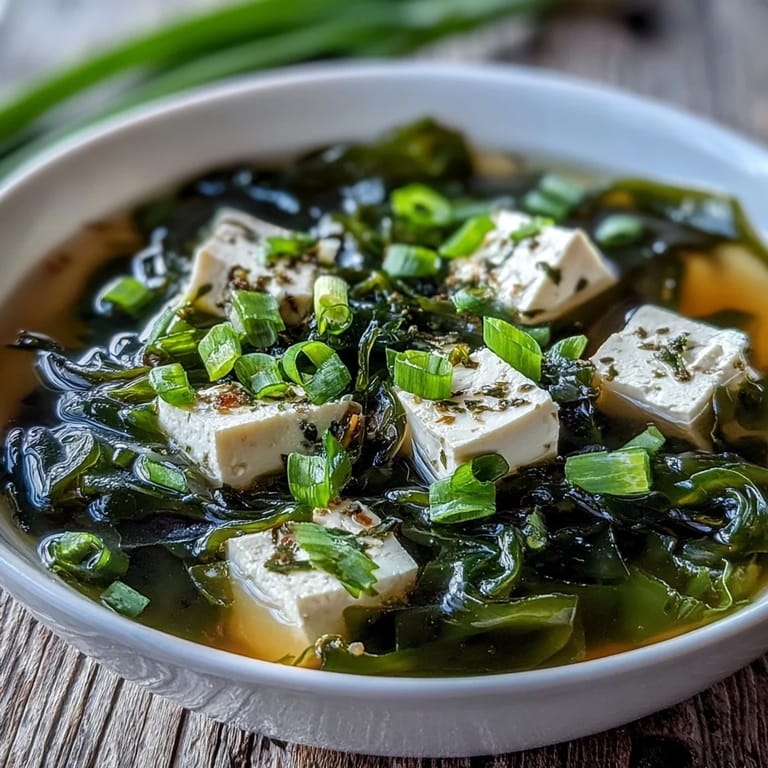 Save to Pinterest
 This soup taught me that the best recipes are the ones that ask for nothing fancy but deliver everything you didn't know you needed. Make it for yourself on a Wednesday evening and taste what quietness feels like.
Recipe Questions & Answers
- → What does wakame seaweed taste like?
Wakame offers a mild, slightly sweet ocean flavor with a tender texture. Unlike stronger seaweeds, it becomes pleasantly silky when rehydrated, absorbing the surrounding broth's flavors while adding subtle umami notes.
- → Can I make this soup vegan?
Yes, simply substitute traditional dashi with kombu and shiitake mushroom stock. This plant-based alternative maintains the soup's depth while keeping it entirely vegan-friendly.
- → Why shouldn't I boil the miso paste?
Boiling miso destroys its beneficial enzymes and alters its delicate flavor profile. Always dissolve miso in warm liquid separately, then stir it in at the end to preserve its probiotic qualities and subtle sweetness.
- → What vegetables can I add to this soup?
Sliced mushrooms, spinach, carrots, or daikon radish work beautifully. Add hearty vegetables like carrots during simmering, but stir in delicate greens like spinach during the final minute to maintain their texture.
- → How do I store leftover wakame soup?
Keep refrigerated in an airtight container for up to 2 days. Reheat gently over low heat, avoiding boiling to preserve the miso's beneficial properties. The tofu will absorb more flavor over time.