 Save to Pinterest
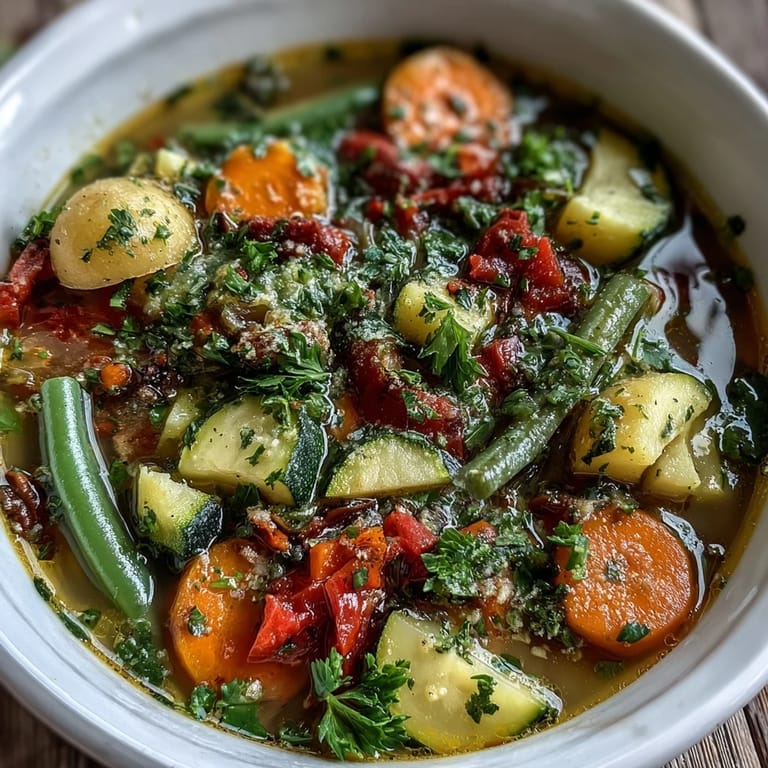
 There's something about the smell of garlic hitting hot olive oil that makes you forget you're standing in a kitchen on an ordinary Tuesday. My neighbor Marco stopped by with a basket of vegetables from his garden—zucchini, bell peppers, tomatoes still warm from the sun—and instead of the usual small talk, we ended up making this soup together. He kept insisting that Italian cooking isn't about fancy techniques, it's about letting each ingredient taste like itself. That afternoon taught me more than any recipe ever could.
I made this for my daughter's book club once, and what started as bringing soup ended with everyone asking for the recipe and somehow staying two hours longer than planned. They kept coming back to the bowls, and I realized it wasn't just hunger—it was comfort. That's when I understood this soup had become something I'd reach for whenever I wanted to feed people properly.
Ingredients
- Olive oil (2 tablespoons): Use good quality oil here since it's one of the first things you'll taste; cheap oil tastes thin and forgettable.
- Onion and garlic (1 medium onion, 2 cloves): These are your flavor foundation, and sautéing them until golden builds a deeper base for everything else.
- Carrots and celery (2 carrots, 2 stalks): The classic trio with onion creates what cooks call a soffritto—a flavor backbone that carries the whole dish.
- Zucchini, red bell pepper, and green beans (1 zucchini, 1 pepper, 1 cup): These bring color and texture, but more importantly, they cook at different rates so you get that lovely variety in each spoonful.
- Diced tomatoes (14 oz can with juices): Don't drain them; those juices are liquid gold and add acidity that brightens everything.
- Vegetable broth (4 cups): The quality matters more than you'd think—a good broth tastes like it was actually made from vegetables, not just salt and water.
- Potato (1 medium, peeled and diced): This thickens the soup naturally and adds a subtle sweetness that balances the herbs.
- Baby spinach (2 cups): Add it at the very end so it keeps its color and bright flavor instead of turning muddy.
- Dried oregano, basil, thyme, rosemary (1 tsp oregano, 1 tsp basil, ½ tsp thyme, ½ tsp rosemary): These dried herbs bloom when they hit the hot broth, filling your kitchen with that unmistakable Italian aroma.
- Bay leaf (1): This adds a subtle complexity you won't be able to identify but will absolutely notice if it's missing.
- Salt and freshly ground black pepper: Taste as you go and adjust at the end; every pot of broth is different.
- Cannellini beans (optional, 15 oz can): These add protein and body, making it more of a main course than a side.
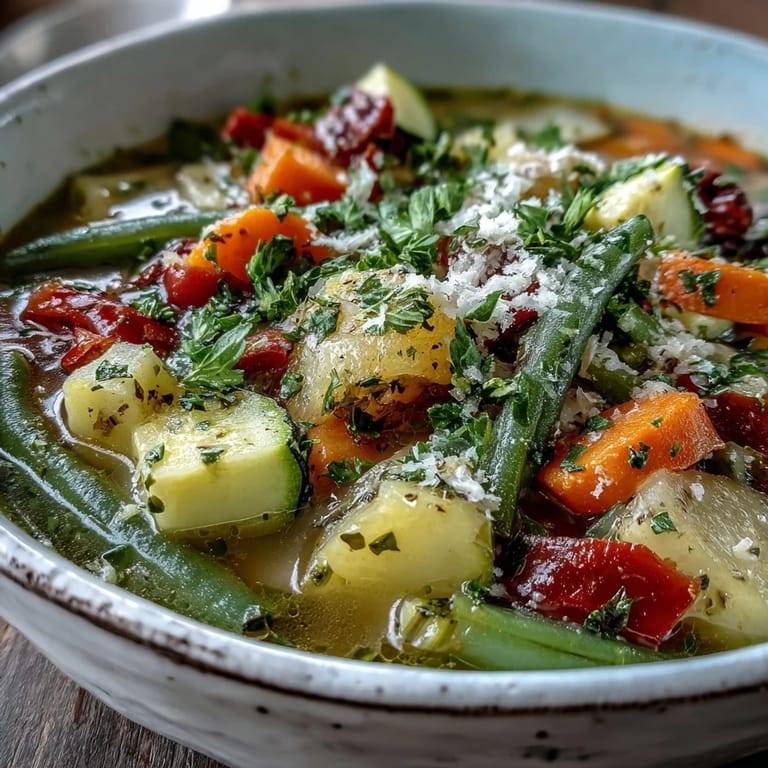
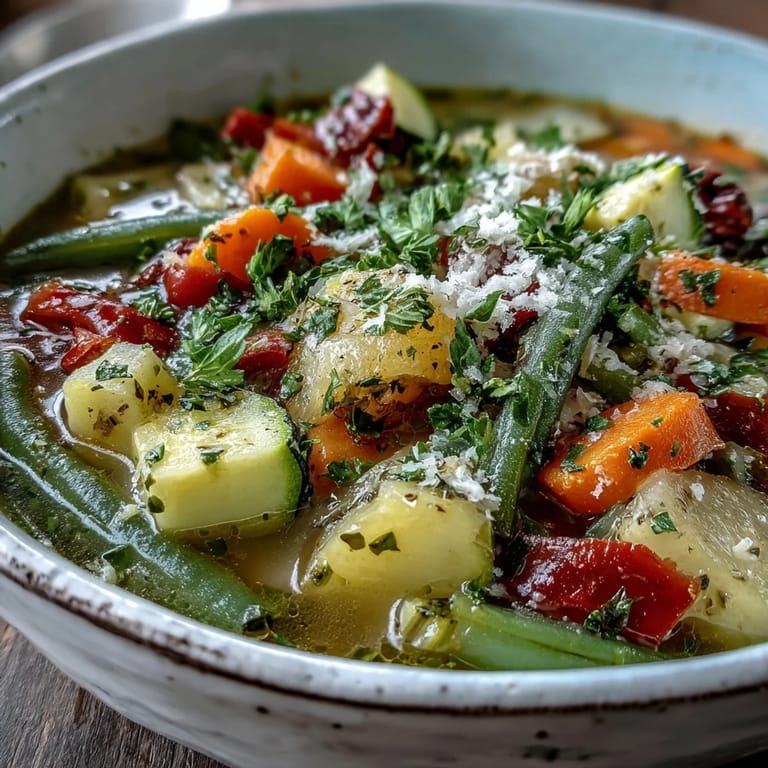
- Fresh parsley and Parmesan (optional, for serving): The brightness of fresh parsley cuts through the richness, and Parmesan adds a savory finish if you're not keeping it vegan.
Tired of Takeout? 🥡
Get 10 meals you can make faster than delivery arrives. Seriously.
One email. No spam. Unsubscribe anytime.
Instructions
- Heat your oil and get the base going:
- Warm the olive oil in a large pot over medium heat, then add your diced onion and minced garlic. You'll know it's ready when the kitchen smells amazing and the onion turns translucent, about 2–3 minutes—this is your signal that the flavors are starting to wake up.
- Build the vegetable layer:
- Toss in the carrots, celery, zucchini, bell pepper, and green beans, stirring occasionally for 5–6 minutes until they start to soften at the edges. You want them to release their flavors into the oil without becoming mushy.
- Bring it all together:
- Add the tomatoes with their juices, vegetable broth, and potato, then stir in all your dried herbs, the bay leaf, salt, and pepper. The pot will smell incredible at this point—that's everything coming together.
- Let it simmer:
- Bring everything to a boil, then turn down the heat and let it simmer uncovered for 20–25 minutes until the vegetables are tender and the flavors have melded. There's no rushing this part; the time does the work for you.
- Add beans if you're using them:
- If you're going with the cannellini beans, add them now and let them warm through for about 5 minutes. They'll soften slightly and absorb all the herby broth.
- Finish with spinach:
- Remove the bay leaf, then stir in the spinach and cook for just 1–2 minutes until it wilts and turns that bright green. Don't overcook it or it'll lose its freshness.
- Taste and adjust:
- Give it a taste and season with more salt or pepper if needed; the broth should be flavorful but not overpowering.
- Serve with care:
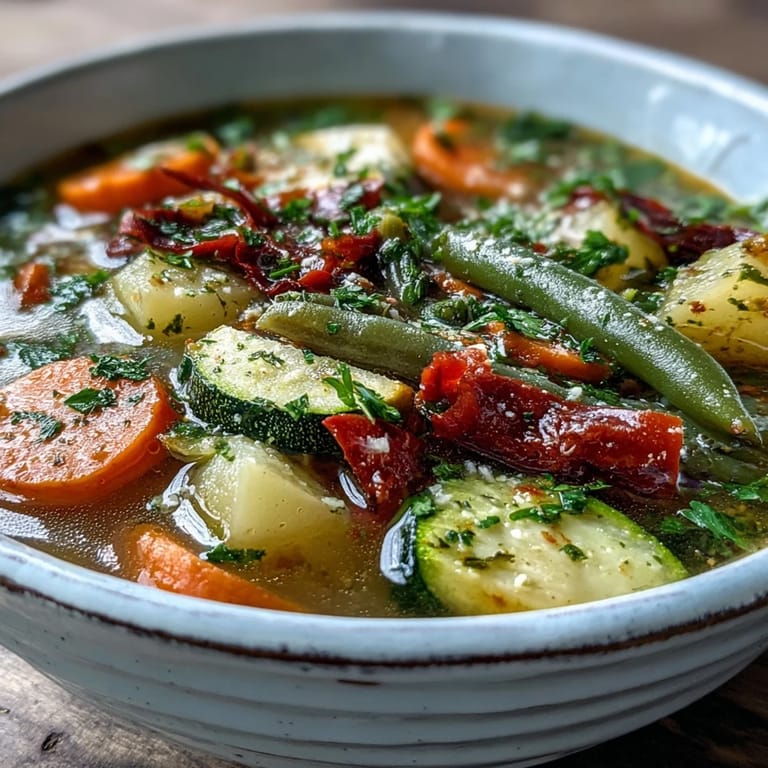
- Ladle into bowls and top with fresh parsley and Parmesan if you like, then serve while it's still steaming and the flavors are at their peak.
 Save to Pinterest
  Save to Pinterest
 My mother-in-law, who's from Rome, tasted this once and said it reminded her of something her nonna used to make. She didn't say it was exactly the same, but the way she closed her eyes while eating felt like the highest compliment. That's when I realized this soup had crossed from being a recipe into being a bridge between people and memories.
Making It Your Own
This soup is forgiving, and that's part of its charm. Some nights I've used whatever vegetables were lingering in my crisper drawer, and it's never been worse for it. The herbs are what keep it feeling Italian and intentional, so as long as you keep those, you can be creative with everything else.
Storage and Make-Ahead Tips
This is one of those soups that tastes better on day two because the flavors have had time to settle and get to know each other. Cool it completely before storing in an airtight container, and it'll keep in the fridge for up to four days or in the freezer for up to three months. When you reheat it, do it gently over medium heat and add a splash of broth if it's thickened up too much.
Variations and Additions
Some mornings I've stirred small pasta like ditalini or orzo into the pot during the last 10 minutes, and it turns into something heartier that sticks with you longer. For gluten-free versions, just make sure your broth is certified and skip the pasta, or use a gluten-free option. You could also add white beans, make it with roasted vegetables for deeper flavor, or even stir in a handful of fresh basil at the very end if you want to taste something that feels a little more summery.
- Small pasta shapes like ditalini or orzo turn this into a more substantial main course when you're extra hungry.
- Fresh basil stirred in at the end tastes completely different from the dried version and adds brightness you might want sometimes.
- Don't forget that garnishes matter—fresh parsley and Parmesan aren't just decoration, they're flavor and texture that finish the dish properly.
 Save to Pinterest
  Save to Pinterest
 This soup taught me that sometimes the best meals aren't complicated, they're just honest. It's the kind of thing you can make on a random Wednesday and feel like you've done something right.
Recipe Questions & Answers
- → Can I use fresh herbs instead of dried?
Yes, substitute with triple the amount of fresh herbs. Add woody herbs like rosemary and thyme early in cooking, and delicate herbs like basil at the end for best flavor.
- → How do I store and reheat leftovers?
Store in an airtight container in the refrigerator for up to 4 days. Reheat gently on the stovetop over medium heat, adding a splash of broth if needed to thin consistency.
- → Can I freeze this soup?
Absolutely. Cool completely, then freeze in portion-sized containers for up to 3 months. Thaw overnight in the refrigerator and reheat on the stovetop. If adding pasta, cook fresh when reheating.
- → What vegetables can I substitute?
Use whatever seasonal vegetables you have on hand. Fennel, kale, Swiss chard, butternut squash, or eggplant work beautifully. Keep cooking times similar for even texture.
- → How can I make this soup more filling?
Add small pasta like ditalini or orzo in the last 10 minutes of cooking, or stir in white beans, chickpeas, or lentils. Serve with crusty bread for a complete meal.
- → Can I make this in a slow cooker?
Yes, sauté the aromatics first, then transfer everything except spinach to a slow cooker. Cook on low for 6-7 hours or high for 3-4 hours. Add spinach in the final 10 minutes.