 Save to Pinterest
 There's something about the smell of sautéed onions and celery that instantly transports me back to my grandmother's kitchen on a gray November afternoon. She was teaching me her philosophy about soup that day—how it's less about precision and more about intuition, about letting the vegetables soften into their own sweetness before anything else joins them. This chicken and rice soup became my version of that lesson, a one-pot refuge that tastes even better when the world outside feels too cold and uncertain.
I made this for my best friend on a night when she'd had one of those weeks—you know the kind, where everything goes wrong at once. She sat at my kitchen counter while I cooked, and by the time I ladled that first bowl, she was already calmer just from breathing in the steam. That's when I realized this soup does something beyond fill your stomach; it's like a warm conversation with someone who actually listens.
Ingredients
- Chicken breasts: Two large ones give you enough protein without overwhelming the broth, and boneless, skinless keeps things lean and quick to cook through.
- Olive oil: Just enough to help the vegetables release their flavors without making the soup slick.
- Yellow onion, carrots, celery: This is the holy trinity that every good soup knows by heart—they're your foundation, your base layer of flavor.
- Garlic cloves: Three minced cloves add depth without shouting; too much turns the soup overpowering and bitter.
- Long-grain white rice: Rinse it first to remove excess starch, which keeps the broth clear and the rice grains separate instead of mushy.
- Low-sodium chicken broth: Eight cups seems like a lot, but it lets the rice cook fully and gives you that silky mouthfeel that makes this feel like an embrace in a bowl.
- Thyme, rosemary, bay leaves: These dried herbs are your quiet backbone—they work together to create something warm and vaguely familiar, like a memory you almost forgot.
- Salt and pepper: Taste as you go near the end; the broth has some sodium already, so you're really just balancing.
- Fresh parsley and lemon: Added at the very end, these brighten everything up and prevent the soup from feeling heavy.
Tired of Takeout? 🥡
Get 10 meals you can make faster than delivery arrives. Seriously.
One email. No spam. Unsubscribe anytime.
Instructions
- Get your vegetables ready:
- Dice that onion into pieces roughly the size of your thumbnail, peel and slice the carrots into half-moons, slice the celery into thin crescents. When everything is cut to similar sizes, they cook evenly and look intentional in the bowl.
- Start with the base:
- Heat your olive oil over medium heat until it shimmers slightly, then add all three vegetables at once. Let them soften for five to six minutes, stirring occasionally so nothing catches on the bottom—you're looking for the onions to turn translucent and everything to smell sweet.
- Wake up the spices:
- Stir in your minced garlic along with the thyme and rosemary, cooking for just one minute until your kitchen smells like a cozy cabin. This step is quick but crucial—it prevents the garlic from becoming harsh or bitter.
- Build your soup:
- Add the raw chicken breasts, pour in all eight cups of broth, toss in the bay leaves, then season with salt and pepper. Bring everything to a boil, which usually takes about five minutes—you'll see the broth ripple and steam rise.
- Add the rice and simmer:
- Stir in your rinsed rice, reduce the heat to medium-low, cover with a lid, and let it cook undisturbed for twenty to twenty-five minutes. The rice will absorb the broth gradually, and the chicken will cook through gently, staying tender rather than stringy.
- Shred and finish:
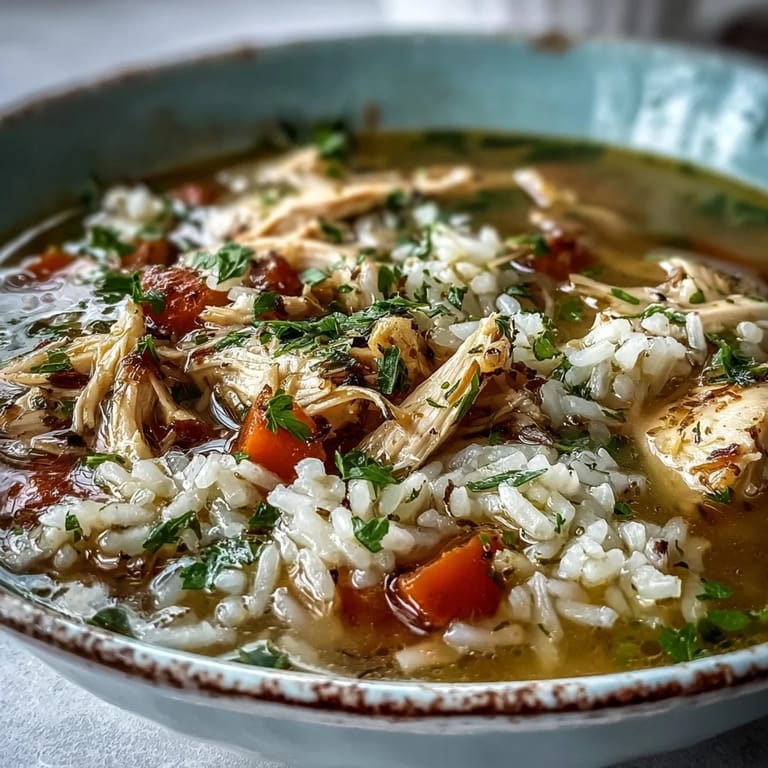
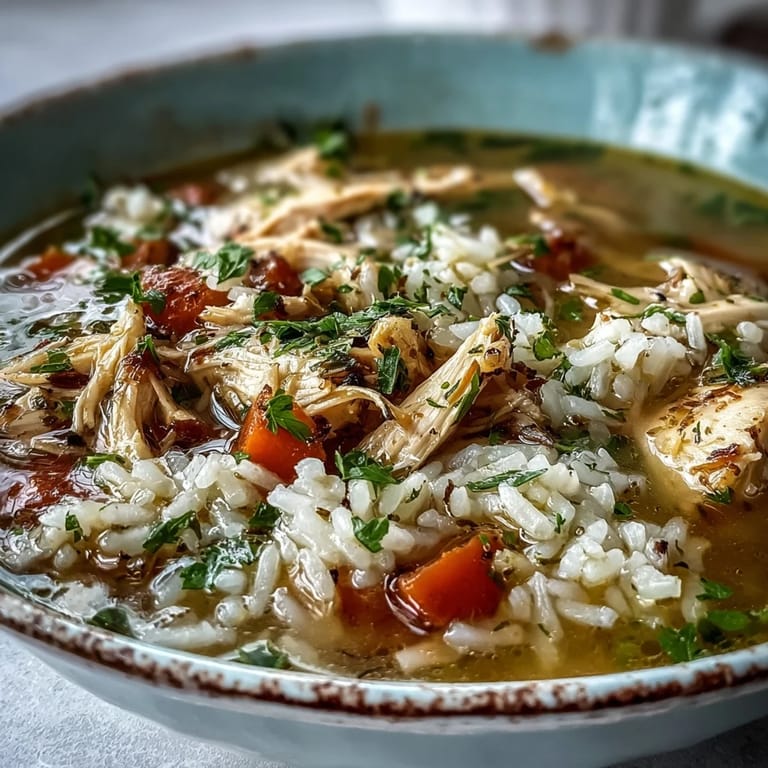
- Remove the chicken to a cutting board and use two forks to pull it apart into bite-sized shreds—the meat should practically fall apart if it's cooked right. Return the shredded chicken to the pot, fish out the bay leaves, stir in your fresh parsley and a squeeze of lemon juice if you have it.
- Taste and adjust:
- Take a spoonful, let it cool slightly, and really taste it. Add more salt, pepper, or even a tiny bit more lemon if something feels like it's missing—this is your moment to make it exactly right.
 Save to Pinterest
  Save to Pinterest
 There was an evening when my partner came home stressed about something work-related, and without really thinking about it, I had this soup waiting. He sat down, took one spoonful, and his whole face just softened—not because the soup was fancy or complicated, but because it was exactly what he needed without him having to ask. That's when I understood that the real magic isn't in the ingredients; it's in the act of making something warm for someone you care about.
When to Reach for This Soup
This is your soup for Sunday nights before the week starts, for when someone's under the weather, for those moments when the sky is gray and your energy is low. It's also perfect for feeding a small crowd without needing to spend hours in the kitchen—you'll have six generous servings in under an hour, which means you can spend more time with your guests instead of hovering over pots.
Variations That Work
I've made this with chicken thighs when I wanted something richer, and the darker meat adds a deeper, almost savory note that changes the entire character of the soup—if you try it this way, you'll understand why some people swear thighs are superior. You can also swap in brown rice if you want more fiber, though you'll need to add about five extra minutes to the cooking time and possibly a bit more broth since brown rice drinks more liquid.
Making It Your Own
The beauty of this soup is that it invites personalization without demanding it. Some people finish with a splash of cream stirred in just before serving, which transforms it into something almost luxurious; others add a handful of spinach in the last minute, which wilts into the broth and adds a subtle earthiness. The lemon is optional but I'd encourage you not to skip it—just half a lemon squeezed in brightens everything and prevents the soup from feeling one-note and heavy.
- If you have fresh herbs on hand like dill or tarragon, try adding them instead of or alongside the dried ones for a fresher spin.
- A small pinch of nutmeg stirred in at the end adds a warmth that people feel but can't quite identify, which is somehow even more comforting.
- Leftover soup freezes beautifully for up to three months, which means you can make a double batch and give yourself the gift of an easy meal later.
 Save to Pinterest
  Save to Pinterest
 This soup has become my go-to answer when someone asks what I'm making, and honestly, I never get tired of it. There's real comfort in having a recipe that never disappoints and that brings people together in the simplest, most genuine way.
Recipe Questions & Answers
- → Can I use chicken thighs instead of breasts?
Yes, chicken thighs work wonderfully and add deeper, richer flavor. Use boneless, skinless thighs and follow the same cooking time, checking that they reach an internal temperature of 165°F.
- → How do I prevent the rice from getting mushy?
Rinse the rice thoroughly before adding it to remove excess starch. Keep the soup at a gentle simmer rather than a rolling boil, and avoid overcooking. If making ahead, store rice separately and add when reheating.
- → Can I make this soup in advance?
Absolutely. The soup keeps well in the refrigerator for up to 4 days. Note that the rice will absorb more liquid as it sits, so you may need to add extra broth when reheating to reach your desired consistency.
- → What can I substitute for long-grain white rice?
Brown rice adds nutty flavor and fiber but requires 40-45 minutes of cooking time. Wild rice, quinoa, or orzo pasta also work well. Adjust liquid and cooking times accordingly based on your grain choice.
- → How can I make this soup creamier?
Stir in 1/2 cup of heavy cream, half-and-half, or coconut milk during the last few minutes of cooking. You can also add a dollop of sour cream or Greek yogurt to individual bowls when serving.
- → Can I freeze this soup?
Yes, but for best results, freeze the soup before adding the rice. Rice can become grainy when frozen and thawed. Cook fresh rice when reheating, or freeze in portions and add freshly cooked rice to each serving.