 Save to Pinterest
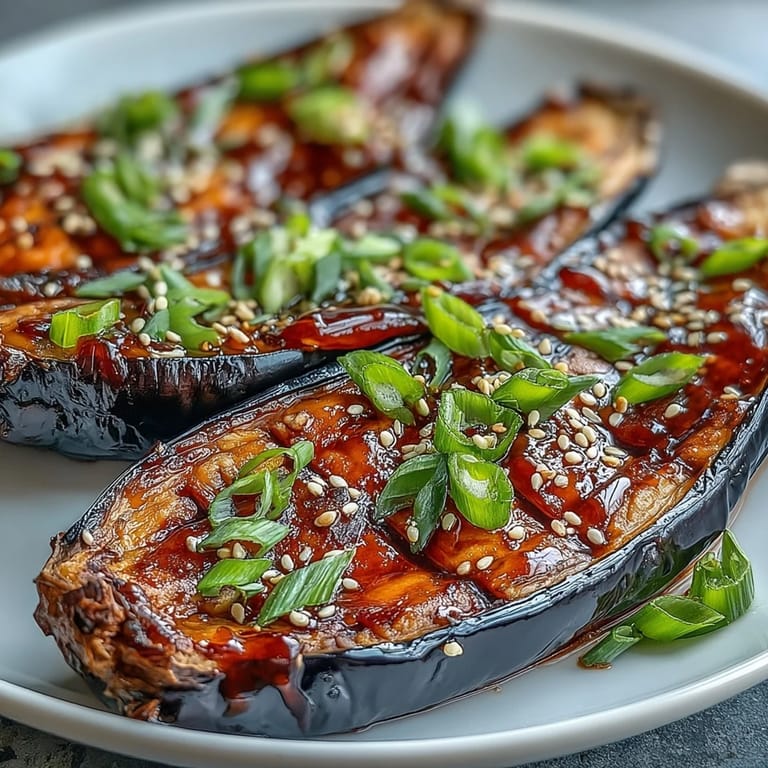
 My first encounter with miso glazed eggplant happened on a quiet Tuesday evening when a Japanese colleague brought leftovers to share at work. The eggplant was impossibly silky, with edges that had caramelized into glossy mahogany strands, and the glaze tasted like umami itself had been painted onto each half. I went home that night determined to recreate it, and after a few attempts at getting the broil timing right, I finally understood why this humble vegetable had become such a fixture in her kitchen.
I made this for my partner on a night when neither of us wanted to overthink dinner, and something unexpected happened. Instead of being a side dish, it became the entire conversation—we kept talking about the interplay between the sweet miso and the savory sesame, forgetting to eat anything else on the plate. That's when I realized this wasn't just a recipe; it was an edible proof that simple ingredients in the right combination create something memorable.
Ingredients
- Japanese eggplants (2 medium): These are thinner and more delicate than globe eggplants, with thinner skin that doesn't need peeling and fewer seeds—they roast to a silky texture that's worth seeking out at an Asian market.
- White miso paste (3 tbsp): The gentler cousin of red miso, it brings sweetness and umami depth without overpowering, and it dissolves smoothly into glazes.
- Mirin (1 tbsp): This sweet rice wine adds shine and prevents the glaze from being one-note; use hon-mirin if you can find it for the best flavor.
- Sake (1 tbsp): It cuts through the richness and helps the glaze caramelize rather than just sit on top like a coating.
- Sugar (1 tbsp): This pushes the glaze toward caramelization during broiling, creating those beautiful burnished edges.
- Sesame oil (1 tbsp, plus more for brushing): The nutty aroma is non-negotiable here—it's what makes people ask what smells so good.
- Toasted sesame seeds (1 tbsp): Buy them already toasted to save time, and their crunch provides textural contrast against the silky eggplant.
- Green onions (2, thinly sliced): A bright finish that cuts through the richness and adds a whisper of sharpness.
Tired of Takeout? 🥡
Get 10 meals you can make faster than delivery arrives. Seriously.
One email. No spam. Unsubscribe anytime.
Instructions
- Heat your oven and prep the pan:
- Preheat to 400°F and line a baking sheet with parchment paper—this prevents sticking and makes cleanup effortless.
- Halve and score the eggplant:
- Slice each eggplant lengthwise and score the cut flesh in a crosshatch pattern without piercing the skin. This helps heat penetrate evenly and creates little pockets that capture the glaze.
- Oil and arrange for roasting:
- Brush the cut sides lightly with sesame oil, then place them cut-side up on your prepared sheet. The oil helps them brown and prevents sticking.
- Roast until tender and golden:
- Roast for 20 to 25 minutes, watching for the flesh to turn golden and yield easily to a fork. The kitchen will start to smell like nutty roasted vegetables, which is your cue to check on progress.
- Whisk the glaze while they roast:
- In a small bowl, combine miso paste, mirin, sake, sugar, and the remaining sesame oil, whisking until completely smooth. No lumps should remain—the miso should feel silky against the whisk.
- Spread glaze generously:
- Remove the eggplants from the oven and brush or spoon a thick layer of glaze onto each cut side, covering them evenly. Don't be shy—this is where all the flavor lives.
- Broil until caramelized:
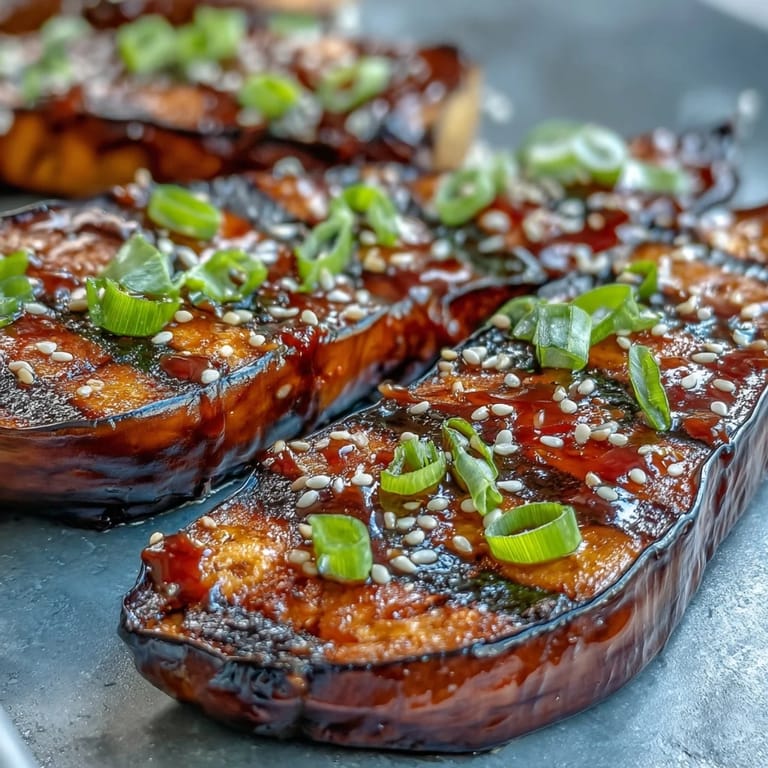
- Switch to broil, return the eggplants to the oven, and watch closely for 2 to 3 minutes until the glaze bubbles, darkens slightly, and develops caramelized edges. This happens faster than you think, so set a timer and stay nearby.
- Finish and serve:
- Remove from heat, sprinkle with toasted sesame seeds and sliced green onions while still warm, then serve immediately. The contrast between warm eggplant and cool garnish is part of what makes this sing.
 Save to Pinterest
 There's a moment during broiling when the glaze transforms right before your eyes, going from a wet paste to something shiny and alive with bubbles. I watched this happen once and felt an unexpected sense of accomplishment—the small miracle of heat and timing and ingredients coming together exactly as they should.
Why This Dish Works
The genius of miso glazed eggplant is that it respects what the eggplant already is while elevating it completely. Roasting alone would be pleasant; the glaze would be cloying on its own; but together they create a balance where sweetness, umami, heat, and nutty richness all have equal weight. The texture contrast—creamy interior, caramelized exterior, crispy sesame, tender green onion—is what keeps you coming back for another bite.
When to Serve This
This dish feels at home as part of a larger Japanese spread alongside steamed rice and miso soup, but it also works beautifully as the star of a light dinner. I've made it for vegetarian guests who were skeptical about eggplant, and I've served it at casual gatherings where people assumed it was more complicated than it actually was. The magic is partly in the wow-to-effort ratio.
Storage and Leftovers
Leftovers keep well in an airtight container for up to three days, though they're best served at room temperature or gently reheated rather than nuked, which can make them watery. Cold miso glazed eggplant is unexpectedly good with a bowl of rice the next day—the flavors somehow deepen overnight. Here are a few final thoughts to keep in mind:
- Make extra glaze if you're cooking for people who love it intense, since some will beg for more.
- If your miso is very salty, taste the glaze before spreading and adjust with a touch more mirin if needed.
- Serve this warm or at room temperature, never cold straight from the fridge, so the eggplant's silky texture shines through.
 Save to Pinterest
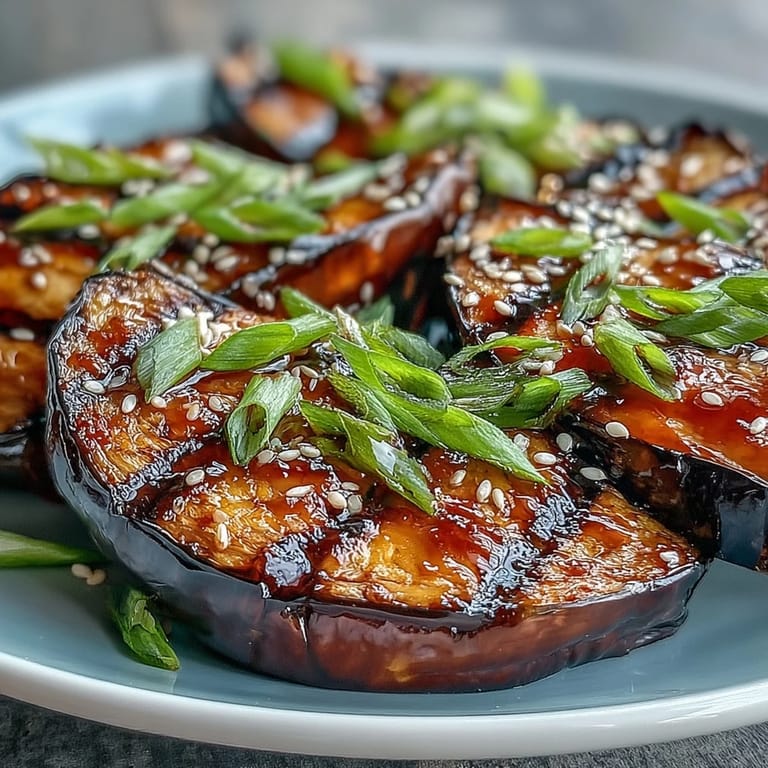
 This recipe became my answer to the question of how to make eggplant exciting without fuss. Once you make it, you'll understand why it endures in Japanese home kitchens.
Recipe Questions & Answers
- → What type of eggplant works best?
Japanese eggplants are ideal because they have thinner skin and fewer seeds than globe varieties. Their elongated shape roasts evenly and becomes incredibly tender. Chinese eggplants make a good substitute if Japanese aren't available.
- → Can I make this gluten-free?
Yes. Use certified gluten-free miso paste and check that your sake and mirin are gluten-free. Traditional varieties may contain barley or other grains, so read labels carefully if avoiding gluten.
- → How do I store leftovers?
Store cooled eggplant in an airtight container in the refrigerator for up to 3 days. Reheat gently in the oven or microwave—note that the glaze may lose some of its caramelized texture upon reheating.
- → Can I substitute the alcohol?
If avoiding alcohol, replace the sake with additional water or vegetable broth. For mirin, use a mixture of water with a touch of sugar or honey to mimic the sweetness and slight acidity.
- → What should I serve with this?
This pairs perfectly with steamed white rice, pickled vegetables, and miso soup for a complete Japanese-inspired meal. It also works well alongside grilled fish or tofu as part of a larger spread.