 Save to Pinterest
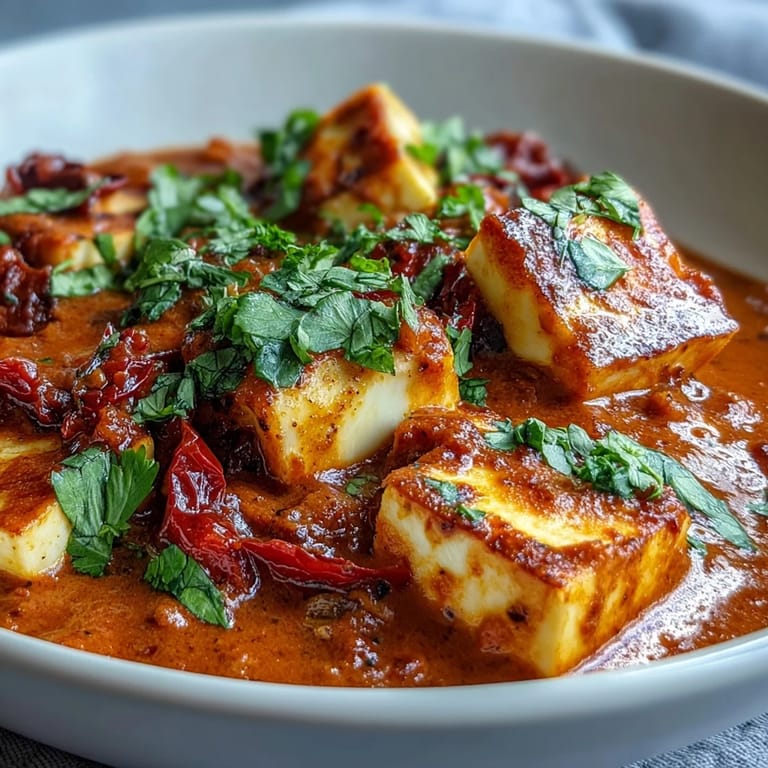
 The smell of toasted cumin hitting hot oil always brings me straight back to my kitchen on a rainy Tuesday when I had a block of halloumi, a can of tomatoes, and absolutely no plan for dinner. I'd been curious about using halloumi in curry ever since a friend mentioned how well it holds up to heat, so I decided to just go for it. The cheese crisped up beautifully in the pan, and when I folded it into that silky coconut tomato sauce, I knew I'd stumbled onto something special. My kids, who usually turn their noses up at anything remotely spicy, cleaned their plates without a single complaint. It became our go-to weeknight meal almost immediately.
I made this for my sister when she visited last spring, and she kept asking what the secret ingredient was. There wasn't one, just good halloumi and patience while the spices bloomed in the pan. She's not vegetarian, but she admitted this beat most of the chicken curries she'd tried. We sat outside with warm naan, tearing off pieces and scooping up the sauce while the sun set. That night, she texted me a photo of her own attempt at home, and I realized I'd passed along something worth keeping.
Ingredients
- Halloumi cheese: This salty, squeaky cheese is the star here, it fries up like a dream and holds its shape in the sauce without melting into mush.
- Onion, garlic, and ginger: The holy trinity of aromatics that builds the foundation of flavor, always mince them finely so they melt into the sauce.
- Red bell pepper: Adds a subtle sweetness and a pop of color, plus it softens beautifully during the simmer.
- Canned chopped tomatoes: The backbone of the sauce, they break down into a rich, tangy base that balances the coconut milk perfectly.
- Garam masala, cumin, coriander, turmeric, chili powder, and paprika: This spice blend creates warmth and depth without overwhelming heat, toast them briefly to wake up their flavors.
- Coconut milk: Go full fat if you can, it makes the sauce luxuriously creamy and ties everything together.
- Tomato paste: Concentrates the tomato flavor and adds body to the sauce, don't skip this step.
- Fresh cilantro and lemon wedges: Bright, fresh finishes that cut through the richness and make every bite feel alive.
Tired of Takeout? 🥡
Get 10 meals you can make faster than delivery arrives. Seriously.
One email. No spam. Unsubscribe anytime.
Instructions
- Fry the halloumi:
- Heat your oil in a large nonstick skillet over medium high heat and add the halloumi cubes. Let them sit undisturbed for 2 to 3 minutes per side until they turn golden and crispy, then pull them out and set them aside.
- Soften the onion:
- Lower the heat to medium and toss in the chopped onion, stirring occasionally for 3 to 4 minutes until it goes soft and translucent. This is where the flavor base begins.
- Build the aromatics:
- Stir in the garlic, ginger, and red bell pepper, cooking for another 2 to 3 minutes until your kitchen smells incredible. The pepper should start to soften but still have a little bite.
- Bloom the spices:
- Add the tomato paste and all your spices, stirring constantly for about a minute. You'll notice the color deepen and the aroma intensify, that's exactly what you want.
- Simmer the sauce:
- Pour in the canned tomatoes and coconut milk, stirring to combine, then season with salt and black pepper. Let it simmer gently for 8 to 10 minutes, stirring occasionally, until the sauce thickens and the flavors meld together.
- Reunite the halloumi:
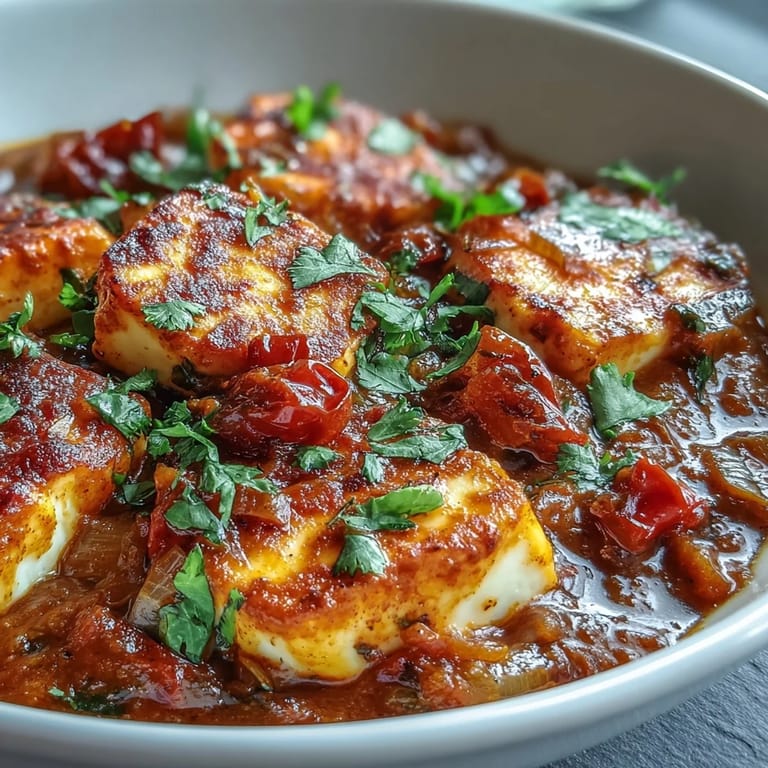
- Gently nestle the fried halloumi back into the pan and let it simmer for 5 minutes. The cheese will soak up the curry flavors while staying beautifully firm.
- Finish and serve:
- Taste and adjust the seasoning if needed, then garnish with fresh cilantro and serve with lemon wedges on the side. Squeeze the lemon over just before eating for a bright, tangy finish.
 Save to Pinterest
 One evening, I served this to a friend who'd sworn off all things curry after a bad experience with an overly spicy vindaloo. She hesitated at first, but after one bite, she relaxed and asked for seconds. We ended up talking late into the night, bowls in our laps, and she admitted she'd forgotten food could feel this comforting without being complicated. It reminded me why I cook, not just to feed people, but to give them a moment of ease.
Serving Suggestions
This curry begs to be scooped up with warm naan or spooned over a mound of fluffy basmati rice. I've also served it with roasted cauliflower on the side for extra vegetables, and it never disappoints. If you want to make it a full spread, add a simple cucumber raita or a handful of crispy papadums. The lemon wedges aren't optional in my house, that burst of citrus right before you take a bite changes everything.
Storage and Reheating
Leftovers keep beautifully in an airtight container in the fridge for up to three days, and honestly, the flavors get even better overnight. When reheating, do it gently on the stovetop over low heat, adding a splash of coconut milk or water if the sauce has thickened too much. I don't recommend freezing this one because the halloumi can get a bit rubbery, but it's so good I doubt you'll have leftovers anyway. If you do freeze it, thaw it in the fridge overnight and reheat slowly, stirring often.
Customization Ideas
If you like things spicier, toss in a chopped green chili with the garlic and ginger, or just bump up the chili powder to your taste. For a more traditional vibe, swap the halloumi for paneer, it behaves almost identically and has a slightly milder flavor. I've also added handfuls of spinach in the last few minutes of cooking for extra greens, and it wilts right into the sauce without changing the texture. You can lighten it up with light coconut milk and a bit less oil, though I think the full fat version is worth it.
- Add a handful of cashews for extra richness and a subtle crunch.
- Stir in a spoonful of Greek yogurt at the end for extra tang and creaminess.
- Try throwing in some peas or diced zucchini if you want more vegetables without changing the vibe.
 Save to Pinterest
 This curry has earned its place in my regular rotation, not because it's fancy, but because it delivers every single time. I hope it finds a spot in your kitchen too, right next to the recipes that feel like home.
Recipe Questions & Answers
- → Can I substitute paneer for halloumi in this curry?
Yes, paneer works perfectly as a substitute and provides a more traditional Indian curry experience. Use the same quantity and frying method, though paneer is softer and won't have halloumi's characteristic squeaky texture.
- → How can I make this curry spicier?
Increase the chili powder to 1 teaspoon or add a fresh chopped green chili with the aromatics. You can also finish with red pepper flakes or fresh sliced chilies as garnish for adjustable heat at the table.
- → Can I use light coconut milk instead of full fat?
Light coconut milk works but creates a thinner, less rich sauce. For best results, use full-fat coconut milk or add 1-2 tablespoons of heavy cream to light coconut milk for improved creaminess.
- → Why do you fry the halloumi before adding it to the curry?
Frying creates a golden crust that adds texture and prevents the cheese from becoming too soft in the sauce. The seared exterior helps the halloumi maintain its shape while still absorbing the curry flavors.
- → What should I serve with this halloumi curry?
Steamed basmati rice is the classic pairing, but warm naan bread, roti, or even crusty bread work beautifully for scooping up the creamy sauce. Add cucumber raita or a simple salad for freshness.
- → How long will leftovers keep in the refrigerator?
Store in an airtight container for up to 3 days. The halloumi will soften slightly but remains delicious. Reheat gently on the stovetop with a splash of water or coconut milk to refresh the sauce.