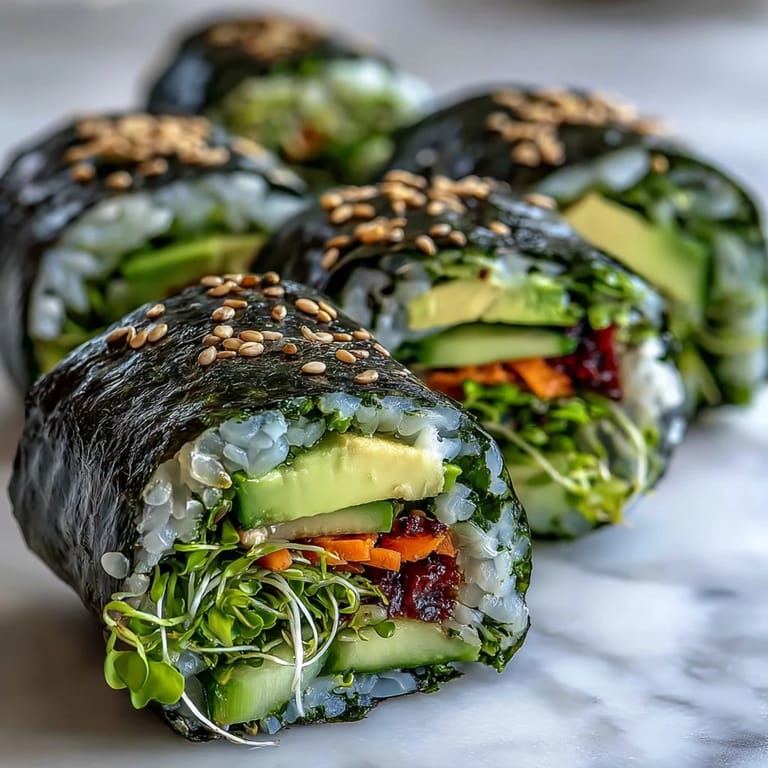
 Save to Pinterest
 Experience the fresh and vibrant taste of Japanese-inspired cuisine with these DIY Nori Rolls with Vegetables. These seaweed rolls are filled with crisp cucumber, creamy avocado, and crunchy sprouts, making them the perfect choice for a healthy snack or a light meal that is naturally vegan and gluten-free.
Save to Pinterest Rolling your own sushi at home is an engaging way to prepare a nutrient-dense dish. By using fresh vegetables like red bell pepper and mixed sprouts, you create a colorful and satisfying appetizer that looks as good as it tastes. Whether you are a beginner or a seasoned home cook, these rolls are simple to assemble and perfect for any occasion.
Ingredients
Tired of Takeout? 🥡
Get 10 meals you can make faster than delivery arrives. Seriously.
One email. No spam. Unsubscribe anytime.
- Vegetables: 1 medium cucumber, julienned; 1 ripe avocado, sliced; 1 cup mixed sprouts (e.g., alfalfa, radish, or broccoli); 1 medium carrot, julienned; 1 small red bell pepper, julienned.
- Others: 8 sheets nori (roasted seaweed); 2 cups cooked sushi rice (optional); 2 tablespoons rice vinegar; 1 tablespoon toasted sesame seeds; Soy sauce or tamari, for dipping; Pickled ginger and wasabi, for serving (optional).
Instructions
- Step 1
- If using sushi rice, mix the cooked rice with rice vinegar and let cool to room temperature.
- Step 2
- Place a sheet of nori shiny side down on a bamboo sushi mat or clean kitchen towel.
- Step 3
- Spread a thin layer of rice (if using) over the lower third of the nori, leaving a 2 cm border at the top.
- Step 4
- Arrange some cucumber, avocado, sprouts, carrot, and bell pepper in a line across the rice. Sprinkle with sesame seeds.
- Step 5
- Using the mat, roll up the nori tightly over the fillings, pressing gently to seal at the top edge with a bit of water if needed.
- Step 6
- Repeat with remaining ingredients to make 8 rolls.
- Step 7
- Slice each roll into bite-sized pieces with a sharp, damp knife.
- Step 8
- Serve immediately with soy sauce or tamari, pickled ginger, and wasabi if desired.
Zusatztipps für die Zubereitung
To ensure your rolls are tight and uniform, use a bamboo sushi rolling mat or a clean kitchen towel. Keep a small bowl of water nearby to dampen your fingers and seal the nori edges effectively. Using a very sharp knife is essential for getting clean cuts through the seaweed and vegetables.
Varianten und Anpassungen
For a grain-free or low-carb version, simply omit the sushi rice and increase the amount of julienned vegetables. You can also add extra protein to your rolls by including firm tofu strips or flavorful marinated mushrooms.
Serviervorschläge
These nori rolls are best served with a side salad for a more complete meal. For a refreshing beverage pairing, enjoy them with a light, crisp white wine or a traditional cup of green tea.
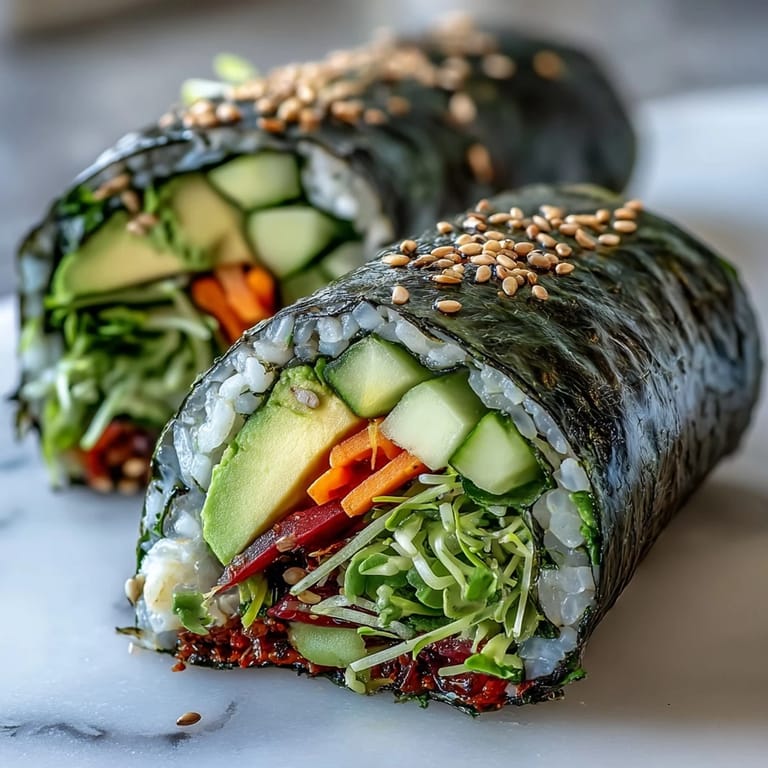 Save to Pinterest
 These Nori Rolls with Vegetables provide a light yet nutrient-packed option, containing only 90 calories and 5 grams of fat per serving when prepared without rice. Enjoy them immediately for the best texture and flavor.
Recipe Questions & Answers
- → Do I need a bamboo mat to make nori rolls?
A bamboo sushi mat helps achieve tight, even rolls, but a clean kitchen towel works just as well. The key is applying gentle, consistent pressure while rolling and sealing the edge with a small amount of water.
- → Can I prepare these rolls ahead of time?
Yes! These rolls hold up well for several hours when wrapped tightly in plastic wrap and refrigerated. Slice them just before serving to maintain the best texture and prevent the nori from becoming soggy.
- → What vegetables work best in nori rolls?
Crunchy vegetables like cucumber, carrot, bell pepper, and radishes create excellent texture. Creamy elements like avocado bind everything together. Avoid watery vegetables like tomatoes that can make the nori soggy.
- → Is sushi rice necessary for nori rolls?
Not at all. The rice traditional adds heartiness and helps fillings stick together, but grain-free versions focus entirely on fresh vegetables. Low-carb options often omit rice entirely or use cauliflower rice as a lighter alternative.
- → How do I prevent the nori from tearing?
Keep your hands slightly damp when handling nori to prevent sticking, and don't overfill the rolls. Place fillings closer to the bottom edge and roll tightly but gently. A sharp knife dipped in water helps create clean slices without crushing the roll.
- → What can I use instead of soy sauce?
Coconut aminos provide a similar umami flavor with less sodium. Tamari works for gluten-free needs, while a simple mixture of rice vinegar and a touch of salt can replicate the tangy depth for those avoiding soy entirely.