 Save to Pinterest
 There's something about the smell of pumpkin hitting hot oil that makes you stop whatever you're doing. A few years back, I was rushing through a Sunday afternoon when the farmers market bag of pumpkins caught my eye, and I decided on a whim to make soup instead of the pasta I'd planned. That decision changed how I think about autumn cooking—suddenly, everything slowed down, the kitchen filled with warmth, and by the time I tasted that first spoonful, I understood why people lose their minds over pumpkin season.
I made this for a small dinner party once, and my friend Sarah—who claims she doesn't like pumpkin soup—went back for seconds without even realizing what she was eating. That moment taught me something: this isn't the cloying, overly sweet pumpkin spice drink everyone expects. It's savory, elegant, and somehow both comforting and sophisticated at the same time.
Ingredients
- Pumpkin, peeled and diced (1 kg or 2.2 lbs): Fresh pumpkin has a subtle earthiness that canned can't quite match, and the texture becomes silky when blended—look for smaller sugar pumpkins rather than carving varieties, as they have better flavor and less watery flesh.
- Onion, chopped (1 medium): This is your flavor foundation, so take those three minutes to cook it until it's truly soft and starting to turn golden at the edges.
- Garlic, minced (2 cloves): Don't skip this step of letting it bloom in the pan—raw garlic will taste harsh, but toasted garlic becomes almost sweet.
- Carrot, peeled and diced (1 medium): Beyond adding natural sweetness, carrots bring body to the soup and help balance the spices beautifully.
- Vegetable broth (1 liter or 4 cups): Quality matters here more than you'd think—a good broth adds depth, while a weak one will leave your soup tasting hollow.
- Heavy cream or coconut milk (200 ml or 3/4 cup plus 1 tbsp): This is the silky finish that makes people close their eyes and sigh; coconut milk works beautifully if you're avoiding dairy and adds its own subtle richness.
- Ground cumin (1 tsp): Cumin brings a warm, earthy undertone that most people can't identify but absolutely notice when it's missing.
- Ground nutmeg (1/2 tsp): A whisper of nutmeg is the secret that makes people say the soup tastes familiar and comforting, even if they can't place why.
- Ground cinnamon (1/2 tsp): Just enough to remind you of autumn without tipping into dessert territory.
- Chili flakes, optional (1/4 tsp): A tiny pinch adds a gentle warmth that makes all the other spices sing without making your mouth burn.
- Salt and freshly ground black pepper: Always taste as you go—this soup can handle more seasoning than you'd expect, especially after you add the cream.
Tired of Takeout? 🥡
Get 10 meals you can make faster than delivery arrives. Seriously.
One email. No spam. Unsubscribe anytime.
Instructions
- Heat your oil and soften the onion:
- Pour a splash of oil into your pot over medium heat—you'll know it's ready when it shimmers and the kitchen starts to warm up. Add your chopped onion and let it sit undisturbed for the first minute, then stir occasionally until it's soft and translucent, about three minutes total.
- Invite the garlic and carrot to the party:
- Stir in your minced garlic and diced carrot, and let them cook for two minutes—you'll smell when they're ready, that bright, slightly sweet aroma that means everything is toasting perfectly.
- Toast the pumpkin with spices:
- Add your diced pumpkin to the pot along with the cumin, nutmeg, cinnamon, and chili flakes if using. Stir everything together for two to three minutes, letting the spices warm and release their oils into the pumpkin—this is when your kitchen will smell absolutely incredible.
- Build the soup with broth:
- Pour in your vegetable broth, bring it to a boil (you'll see the surface start to ripple), then immediately lower the heat and let it simmer gently for twenty to twenty-five minutes. The pumpkin and carrots are done when they're so tender a fork dissolves them completely.
- Blend it smooth:
- Here's where the magic happens—remove the pot from heat and use an immersion blender to puree the soup until it's completely smooth, or work in batches with a countertop blender. Either way, be careful with hot soup, and don't skip this step—the texture is what makes this feel special.
- Cream and season to perfection:
- Stir in your cream or coconut milk, and taste it carefully. Add salt and pepper bit by bit, tasting as you go—you might need more than you think, especially after the cream mellows everything out. Gently reheat if it's cooled down.
- Serve with love:
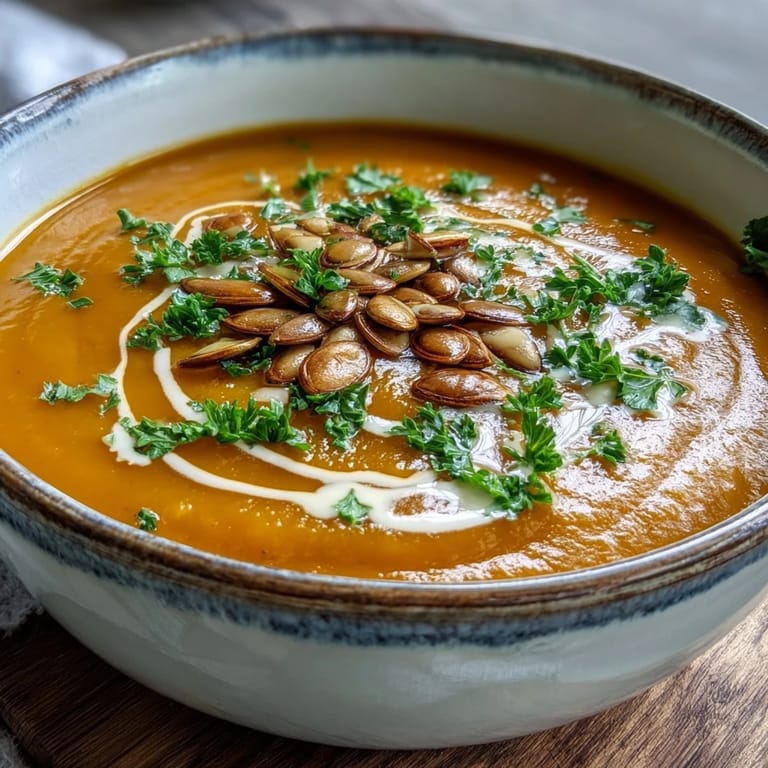
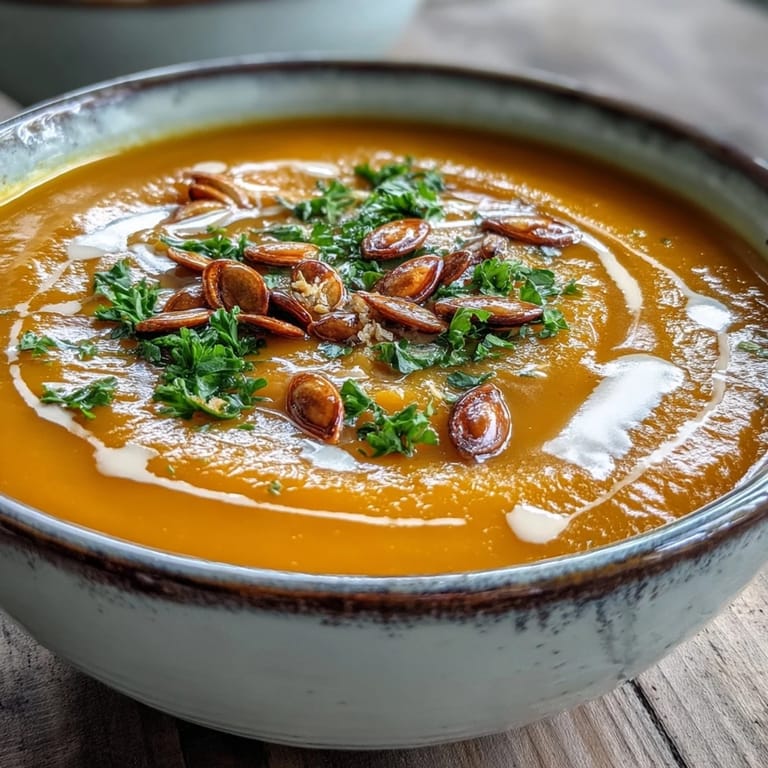
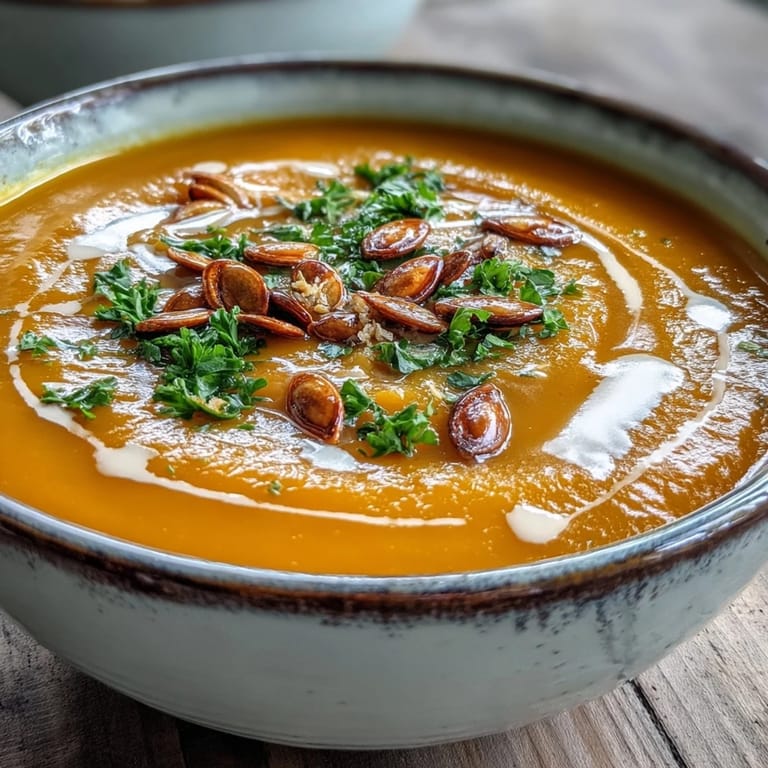
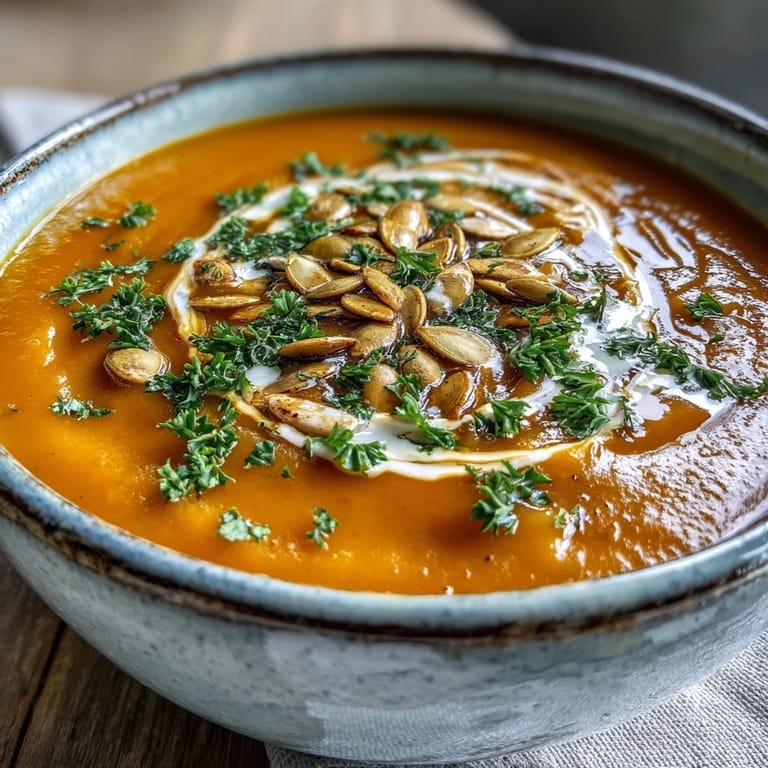
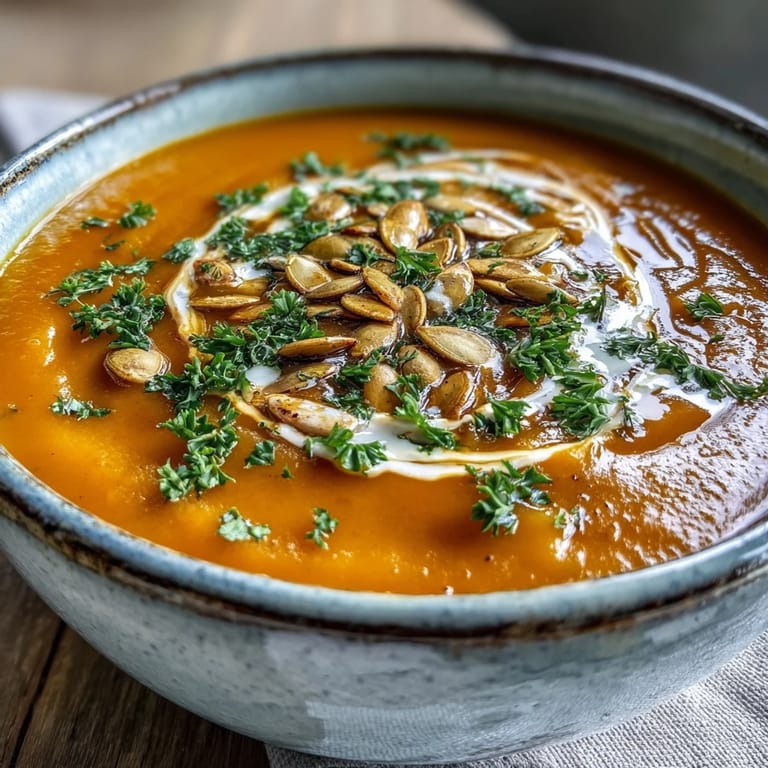
- Ladle into bowls and top with a thin drizzle of cream, a handful of toasted pumpkin seeds, and some fresh herbs if you have them—these garnishes aren't just pretty, they add texture and a little brightness to each spoonful.
 Save to Pinterest
  Save to Pinterest
 There was a particular November evening when my neighbor came by unexpectedly just as I was finishing this soup, and I ended up ladling two bowls, and we sat at my kitchen counter talking until the light outside turned completely dark. That's when I realized this soup isn't really about pumpkin or spices—it's about creating a moment where people slow down and feel taken care of.
The Roasting Secret
If you have twenty-five extra minutes and want to elevate this soup from lovely to absolutely stunning, roast your pumpkin pieces before adding them to the pot. Toss them with a little oil, spread them on a baking sheet, and roast at 400°F until the edges are caramelized and golden. The flavors concentrate, the natural sugars deepen, and suddenly your soup tastes like you've been perfecting it for years. I discovered this almost by accident when I got impatient waiting for the pot to heat up one day, and now I do it whenever I have the time.
Why Fresh Pumpkin Matters
Canned pumpkin is convenient and honestly, in a pinch, it works fine—but fresh pumpkin has a delicate, nutty flavor that canned can't replicate, and the texture when blended is incomparably silky. You can usually find smaller sugar pumpkins or pie pumpkins at farmers markets in autumn, and prepping them takes maybe ten minutes if you have a sharp knife and don't mind a little kitchen mess. The effort pays off in every spoonful, and there's something satisfying about cooking with the whole vegetable instead of something that's been sitting in a can.
Variations and Flexibility
This soup is forgiving and adaptable—I've made it with butternut squash when pumpkins weren't available, and honestly, it's just as delicious. Coconut milk works beautifully for dairy-free versions and actually adds a subtle sweetness that complements the spices in a different way than cream does. Some nights I add a pinch more cinnamon, other times I leave out the chili flakes entirely, and the soup shifts slightly each time without ever feeling wrong.
- Try adding a handful of fresh sage leaves near the end of cooking for an herby, almost Thanksgiving-like twist.
- A small pinch of cayenne pepper can replace the chili flakes if you want a different kind of warmth and spice.
- Serve alongside crispy bread or crackers for texture contrast, or pair with a dry white wine like Sauvignon Blanc if you're making this for dinner guests.
 Save to Pinterest
  Save to Pinterest
 This pumpkin soup has become one of my autumn rituals, the kind of recipe I make when I want to feel grounded and present in my kitchen. It's proof that the simplest ingredients, when treated with care and respect, can become something that people remember.
Recipe Questions & Answers
- → Can I use butternut squash instead of pumpkin?
Yes, butternut squash works perfectly as a substitute. It has a similar texture and slightly sweeter flavor that complements the warming spices beautifully.
- → How can I make this soup dairy-free?
Simply replace the heavy cream with coconut milk. It provides the same creamy texture and adds a subtle tropical note that pairs well with the spices.
- → Can I roast the pumpkin beforehand for more flavor?
Absolutely! Roasting the pumpkin pieces at 200°C (400°F) for 25 minutes before adding to the pot intensifies the natural sweetness and adds depth to the soup.
- → How long does this soup keep in the refrigerator?
The soup stores well in an airtight container in the refrigerator for up to 4-5 days. Reheat gently on the stovetop, adding a splash of broth if needed to adjust consistency.
- → What can I use if I don't have an immersion blender?
A regular countertop blender works perfectly. Just let the soup cool slightly and blend in batches, being careful not to overfill. A food processor can also work in a pinch.
- → Can I freeze this pumpkin soup?
Yes, this soup freezes beautifully for up to 3 months. Freeze before adding the cream, then stir it in after reheating for the best texture and flavor.