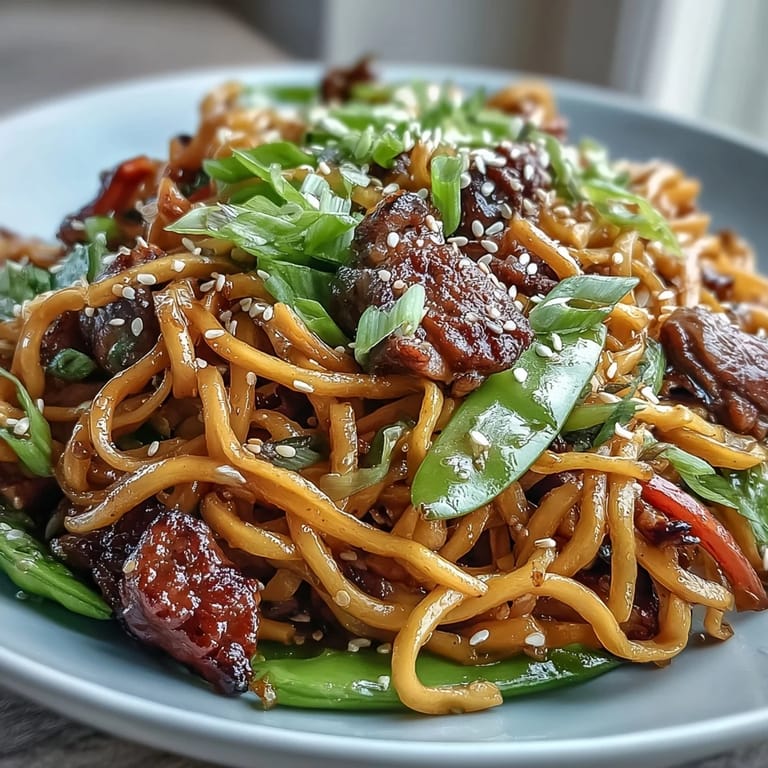
 Save to Pinterest
 The smell of garlic and ginger hitting hot oil always pulls me straight into the moment. I started making this stir-fry on a Wednesday night when the fridge was half-empty and I was too tired to think. What came together in under half an hour became my go-to rescue meal. Now it's the dish I crave when I need something fast, filling, and full of flavor.
I once made this for a friend who swore she didn't like stir-fry. She finished her bowl and asked for the recipe before she even set down her fork. There's something about the way the sesame oil rounds out the soy and oyster sauce that just works. It's become my proof that simple ingredients, treated right, can win anyone over.
Ingredients
- Pork loin or tenderloin: Slice it as thin as you can manage, because thin slices cook fast and stay tender instead of turning chewy.
- Soy sauce and cornstarch: This quick marinade doesn't just season the pork, it creates a silky coating that helps it brown beautifully in the wok.
- Egg noodles or rice noodles: Either works perfectly, just make sure to cook them al dente since they'll soften a bit more when tossed with the sauce.
- Red bell pepper, carrot, and sugar snap peas: Julienne them so they cook evenly and quickly, and don't skip the snap peas because their sweetness balances the salty sauce.
- Garlic and ginger: Fresh is non-negotiable here, the brightness they add is what makes this taste alive instead of flat.
- Oyster sauce, hoisin sauce, and sesame oil: This trio creates depth, sweetness, and a nutty finish that makes every bite craveable.
- Vegetable oil: You need a neutral oil with a high smoke point because your wok should be screaming hot.
- Sesame seeds and fresh coriander: Optional, but they add a final layer of texture and freshness that makes the dish feel complete.
Tired of Takeout? 🥡
Get 10 meals you can make faster than delivery arrives. Seriously.
One email. No spam. Unsubscribe anytime.
Instructions
- Marinate the pork:
- Toss the sliced pork with soy sauce and cornstarch in a bowl, making sure every piece is coated. Let it sit for 10 minutes while you prep everything else.
- Cook the noodles:
- Boil them according to the package directions, then drain and set them aside. A little oil tossed through keeps them from sticking.
- Mix the sauce:
- Whisk together the soy sauce, oyster sauce, hoisin, sesame oil, brown sugar, and water in a small bowl. Having it ready means you won't scramble later.
- Sear the pork:
- Heat a tablespoon of oil in your wok over high heat until it shimmers, then add the pork in a single layer. Let it sear for 2 to 3 minutes until browned, then remove it and set aside.
- Stir-fry the vegetables:
- Add the remaining oil, then toss in the garlic, ginger, bell pepper, carrot, and snap peas. Keep everything moving for 3 to 4 minutes until the vegetables are tender but still have a bit of snap.
- Bring it all together:
- Return the pork to the wok, add the noodles and sauce, and toss everything together for 2 to 3 minutes. The noodles should be glossy and every ingredient should be coated.
- Finish and serve:
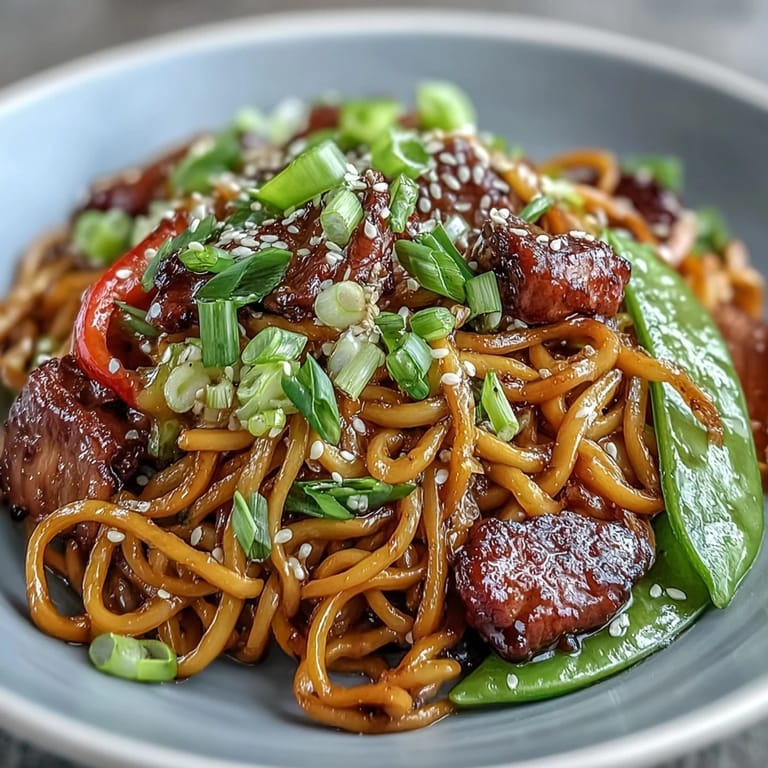
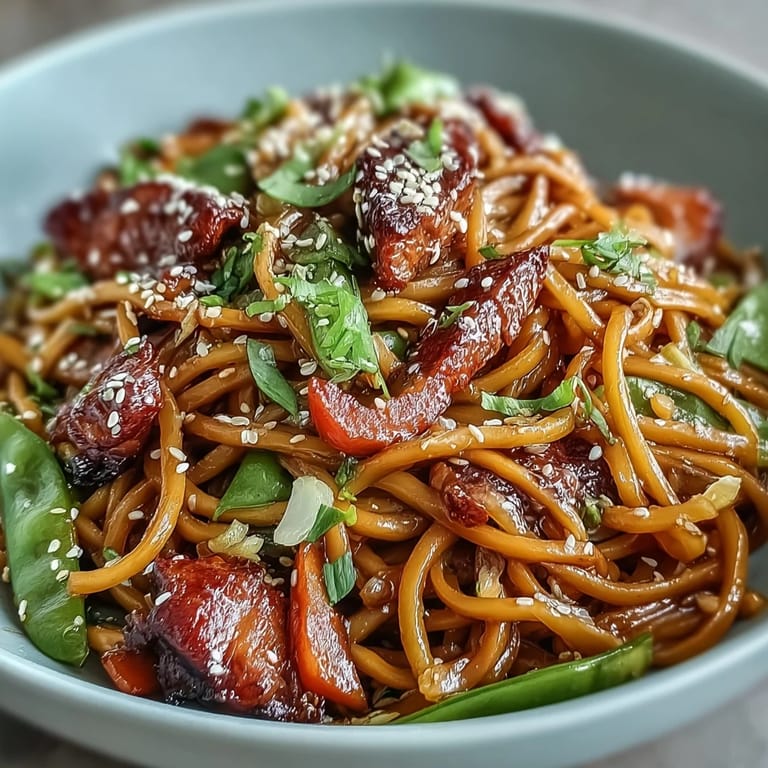
- Toss in the spring onions, give it one last stir, then pull the wok off the heat. Serve it hot, topped with sesame seeds and coriander if you like.
 Save to Pinterest
 There was a night I made this after a long day and realized halfway through that I'd forgotten to buy spring onions. I tossed in some chopped basil instead and it turned out even better than usual. That's when I stopped worrying so much about getting everything exactly right and started trusting the process.
Swaps and Substitutions
If pork isn't your thing, chicken thighs or breast work beautifully, and tofu becomes incredibly satisfying if you press it well and let it get crispy. Shrimp cooks even faster than pork, so just toss it in during the last few minutes. I've also used whatever vegetables were in the crisper drawer, bok choy, mushrooms, baby corn, and broccoli all hold up to the heat and soak up the sauce.
Serving Suggestions
This stir-fry is a complete meal on its own, but sometimes I'll serve it with a side of pickled cucumbers or a light cucumber salad to cut through the richness. A crisp Riesling or a cold light lager pairs beautifully, though I'll be honest, I usually just pour myself whatever's open. It reheats surprisingly well for lunch the next day, though the noodles do soften a bit more.
Make It Your Own
Once you've made this a few times, you'll start to see where you can play. Maybe you like more heat, so you add fresh sliced chili or a spoonful of chili garlic sauce. Maybe you want it sweeter, so you up the hoisin or brown sugar. The bones of this recipe are forgiving, and it's designed to bend around what you have and what you're craving.
- Add a handful of cashews or peanuts for crunch and richness.
- Toss in a beaten egg at the end and scramble it through for extra protein.
- Finish with a squeeze of lime juice to brighten everything up just before serving.
 Save to Pinterest
 This dish has earned its spot in my weeknight rotation because it never lets me down. It's quick, it's satisfying, and it reminds me that good food doesn't have to be complicated.
Recipe Questions & Answers
- → Can I use a different type of meat?
Yes, you can easily substitute chicken breast, beef strips, shrimp, or tofu for the pork. Adjust cooking times accordingly—chicken and beef need 3-4 minutes, shrimp 2-3 minutes, and tofu 4-5 minutes until golden.
- → What type of noodles work best?
Egg noodles and rice noodles both work wonderfully. You can also use udon, ramen, or even soba noodles. Cook according to package directions and rinse with cold water to prevent sticking before adding to the wok.
- → How do I make this gluten-free?
Replace regular soy sauce with tamari or coconut aminos, use rice noodles instead of egg noodles, and choose a gluten-free oyster sauce alternative or mushroom-based sauce. Always verify product labels for hidden gluten.
- → Can I prepare ingredients in advance?
Absolutely. Slice the pork and vegetables up to 24 hours ahead and store in the refrigerator. Mix the sauce and marinate the pork earlier in the day. Cook the noodles just before stir-frying for best texture.
- → What vegetables can I add or substitute?
Bok choy, broccoli florets, mushrooms, baby corn, snap peas, or cabbage all work beautifully. Add harder vegetables like broccoli earlier in the cooking process, and leafy greens like bok choy at the very end.
- → Why is my stir-fry watery?
Ensure your wok or skillet is very hot before adding ingredients, and avoid overcrowding the pan. Cook in batches if needed. Also, drain noodles thoroughly and pat vegetables dry before cooking to prevent excess moisture.