 Save to Pinterest
 My sister called me three days before Mother's Day in a slight panic, asking if I could bring something impressive but not complicated to brunch. I hung up and immediately thought of quiche—that French bistro staple that somehow makes you look like you've spent hours in the kitchen when really, you've barely lifted a finger. I'd made one years ago with leftover vegetables, but this time I wanted to elevate it with Brie and fresh spring asparagus, the kind that snaps when you bend it just right.
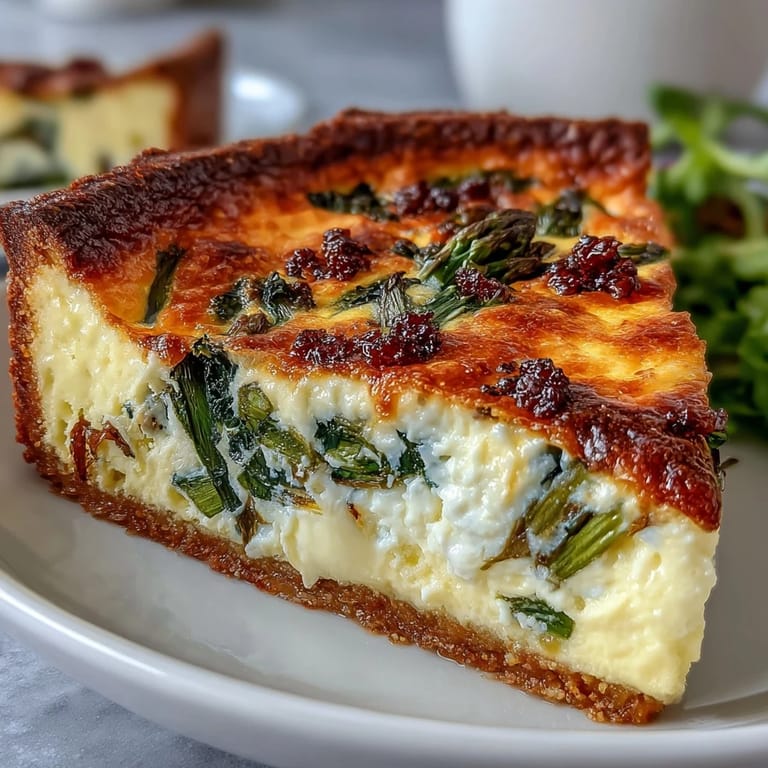
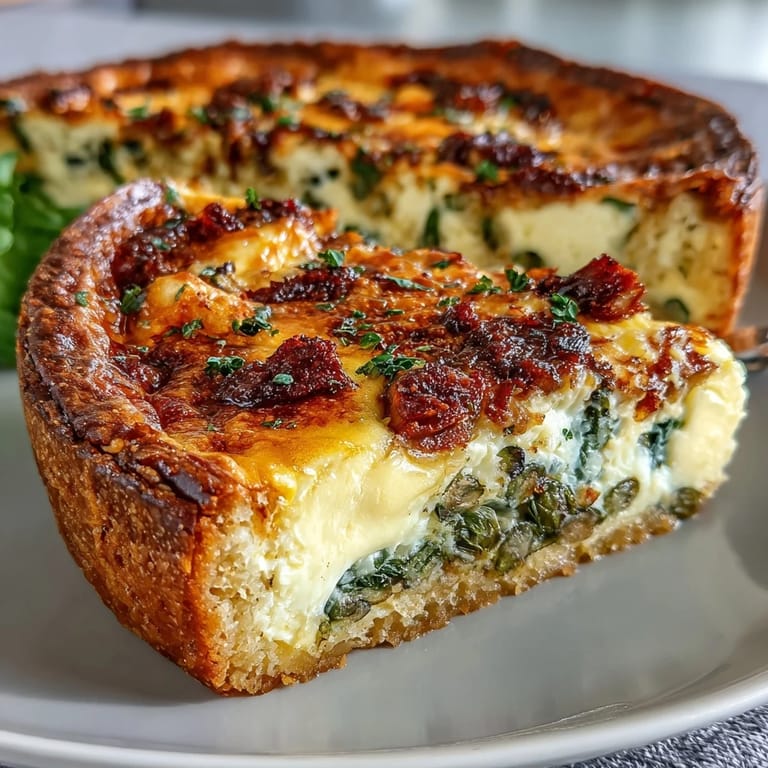
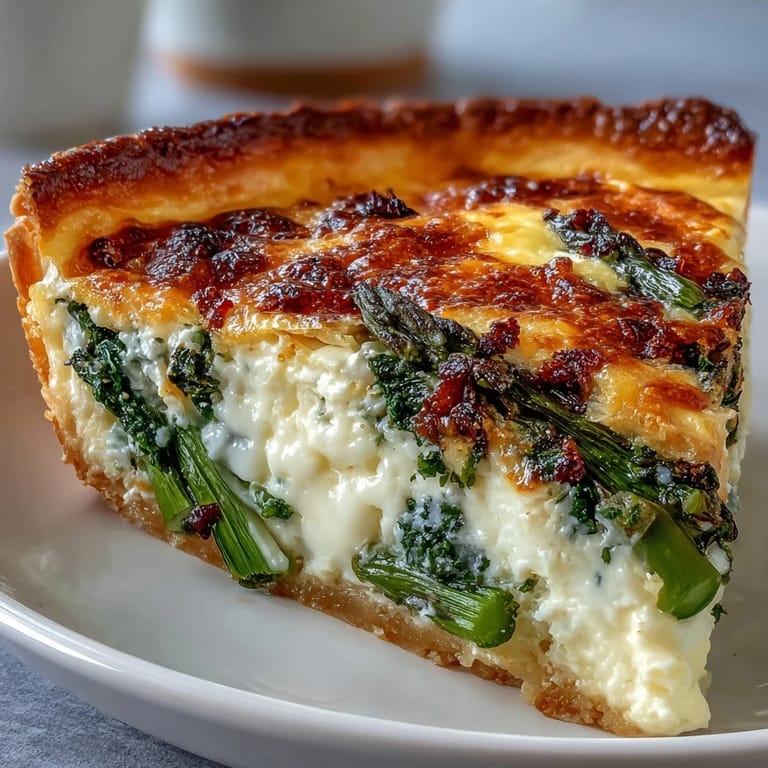
That Mother's Day morning, I remember pulling the quiche out of the oven just as spring sunlight hit the kitchen window, and the golden top caught the light like something you'd see in a glossy magazine. My mom took one bite and asked for the recipe before she'd even put down her fork, which is when I knew I'd nailed it.
Ingredients
- 1 ready-made 9-inch pie crust: I always use store-bought because life is too short, and this quiche is already impressive enough without the pastry stress.
- 1 cup asparagus, trimmed and cut into 1-inch pieces: Fresh spring asparagus is essential—look for stalks that are vibrant green and feel firm, never limp or woody.
- 1 small shallot, finely diced: This adds a subtle sweetness that eggs absolutely love; don't skip it just because it seems like a small thing.
- 5 large eggs: Room temperature eggs blend more smoothly into the custard, so pull them out while you're prepping vegetables.
- 3/4 cup whole milk and 1/4 cup heavy cream: The cream is what makes this silky and luxurious, but you can adjust the ratio if you prefer it lighter.
- 5 oz Brie cheese, rind removed and cubed: Buy a good quality Brie that feels slightly soft when pressed; cheap versions won't melt as beautifully.
- 1/2 tsp salt, 1/4 tsp black pepper, 1/8 tsp ground nutmeg: The nutmeg is optional but transformative—just a whisper of it makes people say the quiche tastes like something special without being able to name why.
Tired of Takeout? 🥡
Get 10 meals you can make faster than delivery arrives. Seriously.
One email. No spam. Unsubscribe anytime.
Instructions
- Warm up your oven and start the crust:
- Preheat to 375°F and press your pie crust into a 9-inch tart pan, then prick the base lightly with a fork so it doesn't puff up unevenly. This small step saves you from a doughy bottom.
- Blind bake for insurance:
- Line with parchment, fill with pie weights or dried beans, and bake for 10 minutes. Remove the weights and paper, then bake another 5 minutes until it's lightly golden—this keeps the crust crispy and prevents sogginess.
- Quick blanch the asparagus:
- Drop your asparagus pieces into boiling salted water for exactly 2 minutes, then drain and spread on a paper towel to dry. This sets the bright green color and takes the raw edge off without making them mushy.
- Whisk the custard base:
- Combine eggs, milk, cream, salt, pepper, and nutmeg in a bowl and whisk until completely smooth—no streaks of egg white visible. This is your foundation, so take 30 seconds and do it right.
- Layer and pour:
- Scatter the shallot and half the asparagus over the crust, pour in the egg mixture, then top with remaining asparagus and Brie cubes scattered across the surface. The Brie on top will get those golden, almost caramelized edges.
- Bake until just set:
- Slide into the oven for 30 to 35 minutes—you're looking for the center to be just barely set, with a slight jiggle if you gently shake the pan, and the top to be golden. Overbaking makes quiche dense and weepy, so pull it out just before you think it's done.
- Rest and serve:
- Let it sit for 10 minutes before slicing—this gives the custard a chance to firm up just enough to cut clean slices. Warm, cold, or room temperature, it's stunning.
 Save to Pinterest
 There's something about quiche that transforms a breakfast table into something fancy without pretension. That Mother's Day, my niece asked why it tasted so much better than the frozen quiches her dad usually buys, and I realized it wasn't really about technique—it was about care, about choosing good Brie and fresh asparagus instead of whatever was on sale.
Why Brie is Non-Negotiable Here
I once made this with regular sharp cheddar because I was in a rush, and the whole thing tasted industrial and one-note. Brie brings something completely different—it's creamy, it's almost buttery, and it melts into the eggs so smoothly that people taste richness instead of cheese. The rind removal matters too; cut it off with a warm knife and it peels away cleanly, leaving you with just the good stuff.
The Asparagus Question
Raw asparagus in a quiche can taste grassy and a little aggressive, so that 2-minute blanch is doing heavy lifting. You could use other spring vegetables here—thinly sliced zucchini, baby spinach, or even roasted mushrooms—but asparagus feels right for brunch because it's seasonal and looks beautiful with that green against the golden egg and melted Brie.
Making It Your Own
The bones of this recipe are so flexible that you can build it around whatever you have or whatever you're feeling. I've made it with crispy bacon, fresh dill, caramelized onions, or roasted tomatoes depending on the season and what's in my fridge. The custard formula stays the same; you're just changing the supporting cast.
- Fresh herbs like chives, dill, or parsley stirred into the egg mixture make it taste like spring.
- A handful of sautéed mushrooms or caramelized onions adds umami depth that makes people go quiet and just eat.
- If you're serving it to someone special, add a pinch of fresh thyme between the layers for an unexplainably elegant touch.
 Save to Pinterest
 This quiche has become my go-to for any occasion where I want to show up with something beautiful and delicious. It's been to baby showers, book clubs, and quiet Sunday brunches, and every time, people ask for the recipe.
Recipe Questions & Answers
- → What type of crust works best for this quiche?
A 9-inch ready-made pie crust or homemade shortcrust pastry both work well. Blind bake it beforehand for a crisp base.
- → How should asparagus be prepared for the filling?
Trim asparagus and blanch in boiling salted water for 2 minutes to keep it tender-crisp and vibrant green.
- → Can other cheeses substitute Brie in this dish?
Soft, creamy cheeses like Camembert or mild goat cheese can be used as alternatives to Brie for similar texture and flavor.
- → What seasoning enhances the custard flavor?
Salt, black pepper, and a touch of ground nutmeg add warm, subtle depth without overpowering the delicate ingredients.
- → How long should the quiche cool before serving?
Allow the quiche to rest for about 10 minutes after baking to set the custard and make slicing easier.