 Save to Pinterest
 My neighbor Maria stopped by one spring afternoon with an armful of fresh herbs from her garden, and I suddenly had more dill and chives than I knew what to do with. Rather than let them wilt in the crisper, I found myself squeezing lemons and building this soup from whatever felt bright and alive in that moment. The first spoonful surprised me—how something so simple could taste like sunshine and soil at the same time.
I served this to my sister during a conversation about her new job, and she barely stopped talking long enough to take bites. There was something about the warm bowl and the herbaceous steam that made the kitchen feel less like a place to eat and more like a place where good things happened. She asked for the recipe before she left, and I realized I'd been so focused on the flavor that I'd almost forgotten to write it down.
Ingredients
- Olive oil: Use good quality extra virgin if you have it—the flavor matters when there aren't many ingredients competing for attention.
- Onion: One medium onion chopped fine will dissolve into the broth and become the foundation of everything else.
- Garlic cloves: Mince them small so they distribute evenly and don't overpower the delicate herbs.
- Carrots and celery: Dicing these uniform and smaller means they soften quickly without falling apart.
- Vegetable broth: Low sodium is worth seeking out because you control the seasoning and the lemon can shine through.
- Lemon zest: This little bit of outer skin holds oils and flavor that juice alone cannot deliver—don't skip it.
- Lemon juice: Squeeze it fresh from two lemons rather than using bottled, the difference is noticeable.
- Fresh parsley: Chopped roughly at the end, it adds earthiness without bitterness.
- Fresh dill: This is the herb that makes people ask what you did differently, so use good quality fresh dill if possible.
- Fresh chives: Their mild onion note bridges the citrus and herbs together quietly.
- Fresh thyme: Just a teaspoon of the tender leaves adds an unexpected depth.
- Cooked rice or orzo: Optional but it transforms the soup from a broth into something more substantial if you're eating it as dinner.
- Salt and pepper: Taste as you go because you're the final judge of balance.
Tired of Takeout? 🥡
Get 10 meals you can make faster than delivery arrives. Seriously.
One email. No spam. Unsubscribe anytime.
Instructions
- Warm your foundation:
- Heat olive oil in a large pot over medium heat and add the chopped onion, stirring until it becomes translucent and sweet smelling—about 3 minutes. You'll notice the pot start to smell like something good is happening.
- Build the flavor base:
- Add the minced garlic, diced carrots, and celery pieces, stirring everything together and letting it cook for 5 minutes. The vegetables will soften at the edges and the aromatics will fill your kitchen.
- Pour in the broth:
- Add all 5 cups of vegetable broth and bring it to a boil, then immediately lower the heat to a gentle simmer. Let it bubble quietly for 10 minutes so the vegetables have time to become tender.
- Introduce the citrus and herbs:
- Stir in the lemon zest, fresh lemon juice, parsley, dill, chives, and thyme, then simmer for another 5 minutes. The soup will brighten immediately and smell like a Mediterranean garden.
- Add body if you choose:
- If you're using rice or orzo, stir it in now and let everything heat through for 2 to 3 minutes. The grains will absorb some of the broth and make the soup feel more complete.
- Season and serve:
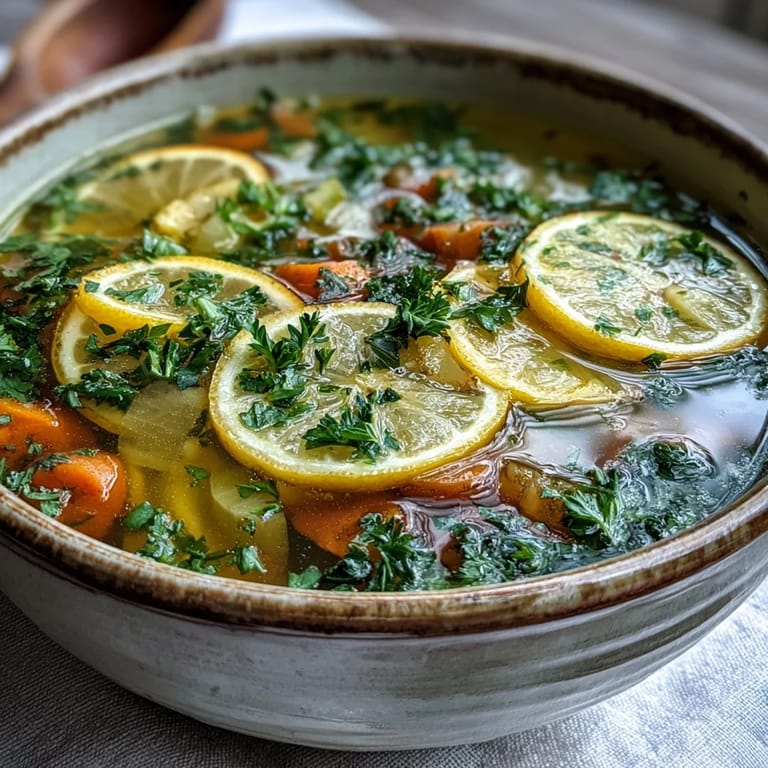
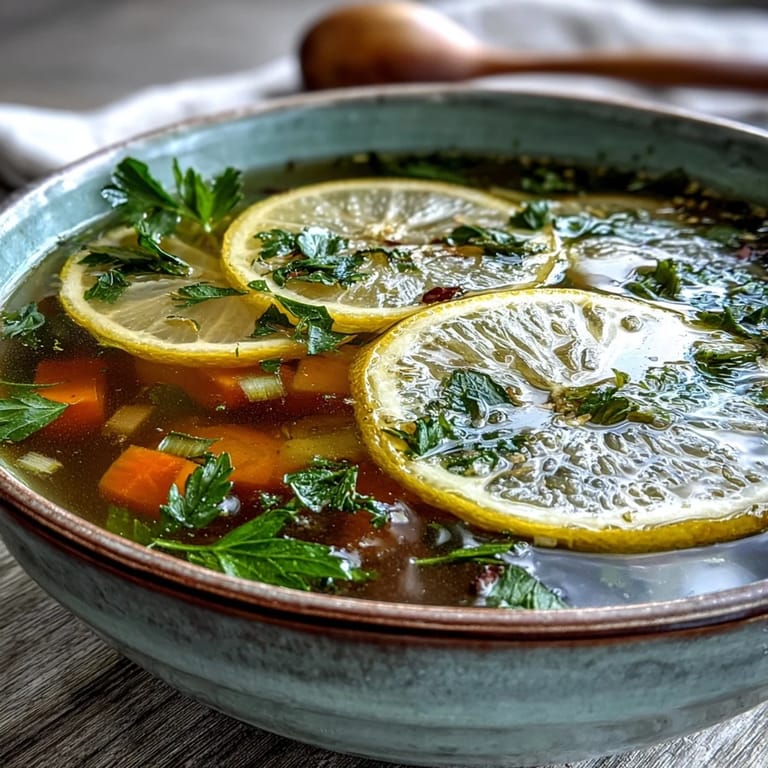
- Taste the soup and add salt and pepper until it feels balanced—remember that the lemon is doing a lot of the seasoning work. Ladle it into bowls and top with extra herbs and thin lemon slices if you want to be generous.
 Save to Pinterest
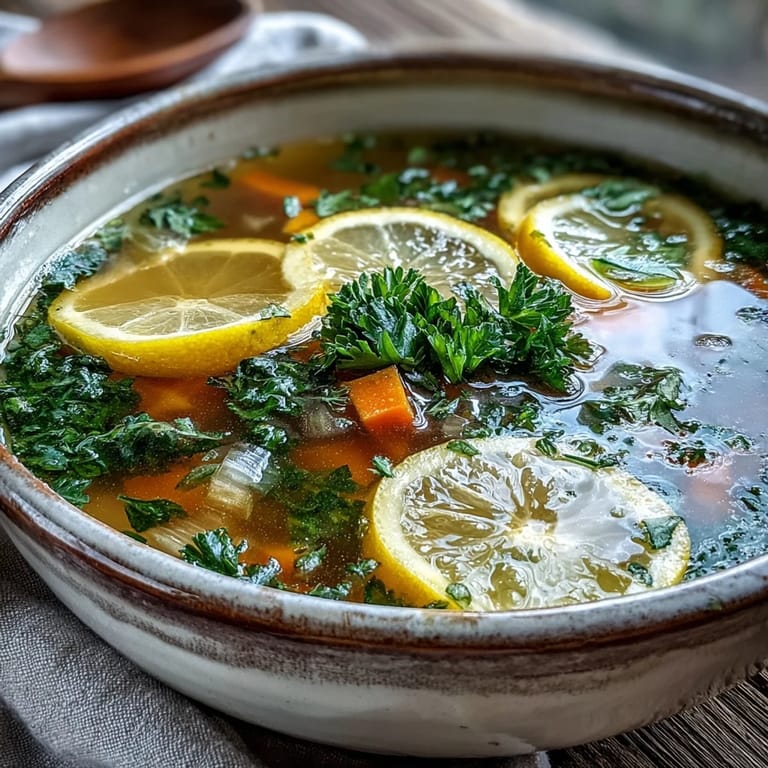
 My daughter came home from school on a gray afternoon and sat at the kitchen counter while I made this, watching the green herbs sink into the golden broth. She asked if she could help, and suddenly she was tasting and suggesting and becoming part of the process. By the time we ate it together, the soup had become less about lunch and more about the fact that we'd made something small and good.
When to Make This Soup
Spring is when this soup feels most natural because that's when fresh herbs are abundant and bright flavors call to you after months of heavier food. But honestly, I've made it in the dead of winter using supermarket herbs, and it still brought that same sense of lightness. Any time you want something that tastes like it took longer than it actually did, this is your answer.
How to Adapt It Without Losing the Spirit
The beauty of this soup is that it accepts gentle changes without complaining. Swap the dill for basil if you're thinking Mediterranean, or use tarragon if you want something more sophisticated. I've added a handful of baby spinach at the very end, let it wilt into the hot broth, and nobody missed a thing.
What to Serve Alongside It
This soup feels incomplete without something to dip into it—crusty bread is the obvious choice, but thin almond crackers work too if you're keeping things light. A simple green salad with olive oil and lemon dressing mirrors the soup's flavors and makes a meal feel substantial. Pair it with a dry white wine and suddenly you're not eating lunch, you're having an experience.
- Toast bread with a little garlic and olive oil for something special without much effort.
- A wedge of good cheese and some olives on the side turn this into a casual Mediterranean spread.
- Finish with a drizzle of really good olive oil and a crack of fleur de sel for luxury that costs almost nothing.
 Save to Pinterest
 This soup taught me that sometimes the best meals aren't the complicated ones—they're the ones where every ingredient has a reason and nothing is wasted. Pour yourself a bowl and remember that simplicity, when done right, is a luxury.
Recipe Questions & Answers
- → Can I make this soup ahead of time?
Yes, this soup can be prepared up to 3 days in advance. Store it in an airtight container in the refrigerator. Add fresh herbs just before serving for the brightest flavor. Reheat gently on the stovetop.
- → What can I substitute for fresh herbs?
While fresh herbs provide the best flavor, you can use dried herbs in a pinch. Use one-third the amount of dried herbs compared to fresh. Add them earlier in the cooking process to allow their flavors to develop fully.
- → How can I make this soup more filling?
Add cooked rice, orzo, or small pasta shapes for extra substance. Shredded cooked chicken, white beans, or chickpeas also make excellent protein-rich additions that complement the lemon and herb flavors beautifully.
- → Can I freeze leftover soup?
Yes, this soup freezes well for up to 3 months. Cool completely before transferring to freezer-safe containers. Note that fresh herbs may lose some vibrancy, so consider adding a sprinkle of fresh herbs when reheating.
- → What type of broth works best?
Low-sodium vegetable broth is recommended so you can control the salt level. Chicken broth can be substituted for a different flavor profile. Homemade broth will provide the richest, most flavorful results.
- → How do I prevent the soup from becoming too tart?
Start with the juice of one lemon and taste before adding more. The vegetables and broth will balance the acidity. If it becomes too tart, add a pinch of sugar or an extra cup of broth to mellow the flavors.