 Save to Pinterest
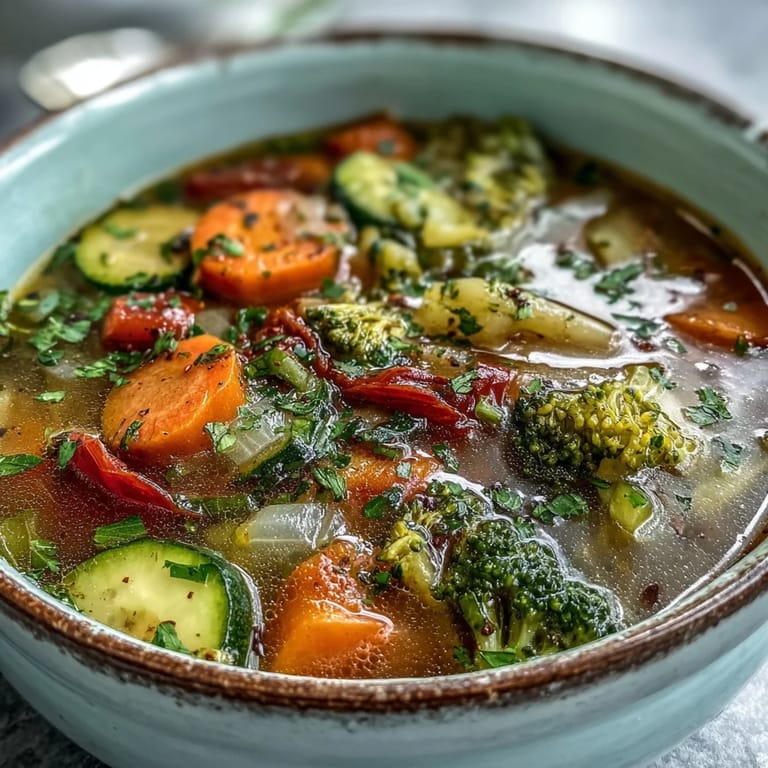
 My neighbor stopped by on a gray afternoon with fresh ginger from her garden, still crusted with soil, and somehow that simple gesture turned into a quiet kitchen ritual. I'd been reaching for the same tired soups all winter, but watching her grate that ginger—the steam rising, the pungent warmth filling the air—made me realize I'd been cooking small when I could be cooking alive. This soup became the thing I make when I want to feel better without trying too hard, when the kitchen needs to smell like something honest and real.
I made this for my sister after her surgery, when she needed something nourishing but not heavy. She sat at my kitchen counter with a blanket draped over her shoulders, and I watched her take that first spoonful—the way her shoulders relaxed, how she actually smiled for the first time in days. She asked for the recipe before she left, and now she makes it whenever she's taking care of someone else.
Ingredients
- 1 medium onion, diced: The foundation of everything good—this releases its sweetness as it softens, building the flavor base that holds the whole soup together.
- 2 carrots, peeled and sliced: Their natural sugars caramelize slightly as they cook, adding subtle depth without needing extra sweetener.
- 2 celery stalks, sliced: This is your quiet flavor carrier; it might not be the star, but the soup tastes incomplete without it.
- 1 red bell pepper, diced: Beyond color, it brings a gentle sweetness and brightness that makes the soup feel lighter and more alive.
- 1 zucchini, diced: Adds body and texture without stealing the spotlight from your aromatics.
- 2 cups broccoli florets: These hold their shape beautifully and add an earthy note that grounds the entire bowl.
- 2 tbsp fresh ginger, peeled and grated: This is where the soul lives—use the finest grater you have and don't hold back on the amount, the warmth of it matters more than you'd think.
- 3 garlic cloves, minced: Mince these yourself if you can; jarred loses something essential in translation.
- 6 cups vegetable broth: Quality broth makes the difference between a soup that tastes like soup and one that actually nourishes you.
- 1 tbsp olive oil: Just enough to coax out flavors without making anything feel heavy.
- 1 tsp sea salt: Start here and taste as you go; you might need less if your broth runs salty.
- 1/2 tsp freshly ground black pepper: Always grind it fresh, pre-ground loses its bite.
- 1 tbsp soy sauce or tamari: Optional but not really—it adds a savory depth that makes people ask what your secret ingredient is.
- 2 tbsp fresh cilantro or parsley, chopped: This is your finishing touch; don't skip it, the brightness matters.
- 1 tsp toasted sesame oil: A drizzle of this at the end transforms everything into something almost luxurious.
Tired of Takeout? 🥡
Get 10 meals you can make faster than delivery arrives. Seriously.
One email. No spam. Unsubscribe anytime.
Instructions
- Warm your pot and build the base:
- Heat the olive oil over medium heat until it shimmers slightly, then add your diced onion, carrots, and celery together. Let them soften for about 5 minutes, stirring occasionally—you're not looking for color here, just for the vegetables to lose their sharp edges and start releasing their natural sweetness.
- Bring in the aromatics:
- Add your minced garlic and grated ginger at the same time, stirring constantly for about 2 minutes until the kitchen smells undeniably good. This is the moment everything changes; the heat releases the ginger's warmth and the garlic's complexity, and you'll notice the smell shift from raw to inviting.
- Add the rest of your vegetables:
- Toss in your bell pepper, zucchini, and broccoli florets, stirring to coat everything lightly with the oil and aromatics. Cook for another 3 minutes just to give them a gentle start.
- Introduce the broth and bring to life:
- Pour in your vegetable broth slowly and stir, scraping the bottom of the pot gently to lift up any flavor stuck there. Turn the heat up until the soup reaches a gentle boil, then reduce immediately to a simmer.
- Season and let it meld:
- Add your salt, pepper, and soy sauce if you're using it, then let the soup simmer uncovered for 15 to 20 minutes until the vegetables are tender but still have a little integrity to them. Taste halfway through and adjust seasonings; this is your chance to make it exactly what you want.
- Finish and serve with intention:
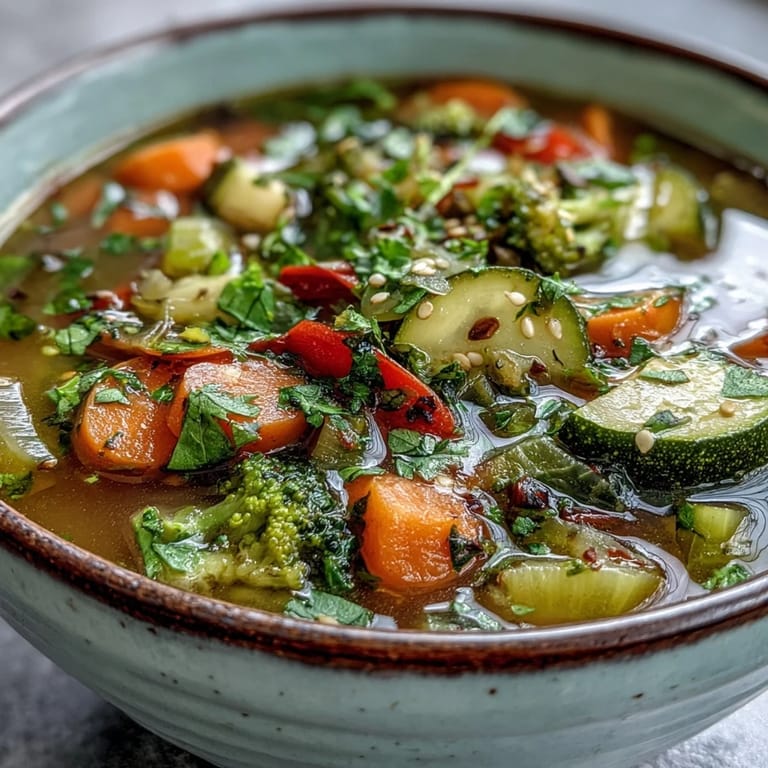
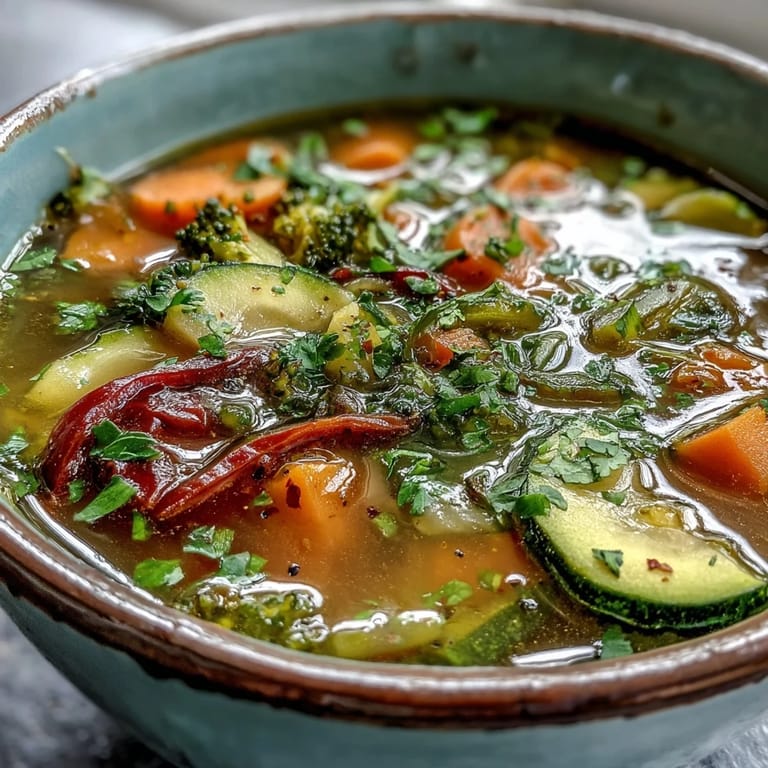
- Ladle the hot soup into bowls, then drizzle each one with sesame oil and scatter fresh herbs across the top. The heat will bring out the sesame's nutty aroma, and suddenly you've made something that tastes restaurant-quality in your own kitchen.
 Save to Pinterest
  Save to Pinterest
 This soup taught me that cooking for someone during a difficult time is a form of language all its own. There's no need to explain or apologize for something simple—the warmth of it speaks louder than any words could.
Variations That Actually Work
I've tried swapping vegetables more times than I can count, and honestly, the soup is forgiving enough to handle almost anything. Snap peas add a crisp sweetness, spinach wilts in beautifully at the very end, mushrooms deepen the earthiness if you add them with the aromatics. The structure stays the same, which is comforting; you're not reinventing anything, just shifting the flavors slightly to match what you have or what you're craving that particular day.
When You Want More Substance
There were nights when I made this and my partner looked at the bowl and said quietly, 'Is there anything else?' Not in a rude way, just hungry. I started keeping cooked lentils in the freezer, adding a handful at the simmer stage, and suddenly the soup became a meal instead of a starter. Tofu cubes work beautifully too if you press them first and add them toward the end so they don't dissolve completely.
The Finishing Details That Matter
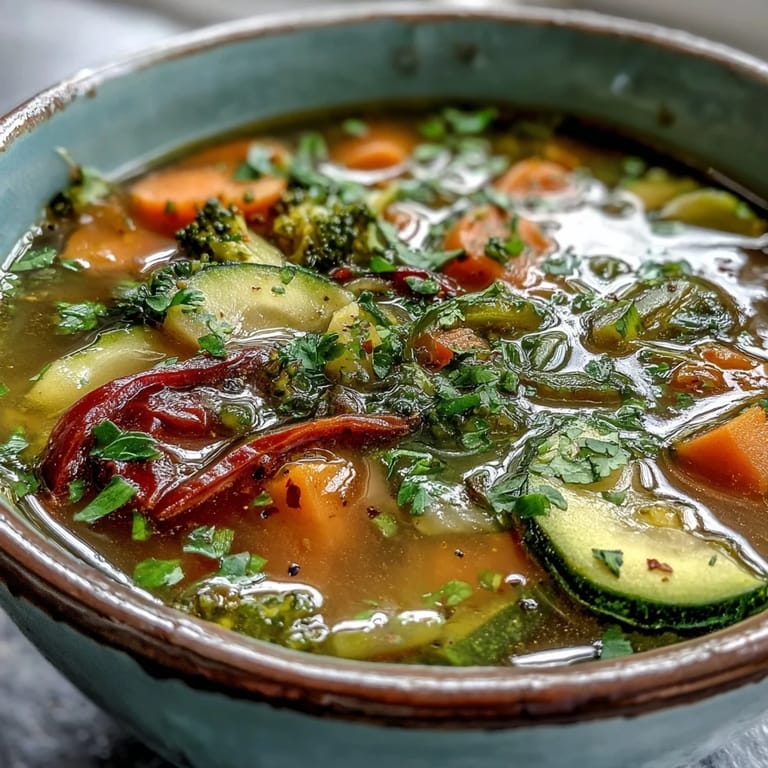
The last steps aren't really steps at all—they're the difference between soup and an experience. Serving it with crusty bread means you get to soak up every last bit, and rice noodles stirred in at the table make it feel almost Asian-inspired. A pinch of chili flakes adds heat without overpowering, sesame oil drizzled at the end brings nuttiness, and fresh herbs scattered on top give you that restaurant-quality moment that reminds you that you made something real.
- Always taste before serving and adjust salt—you're the only one who knows exactly what you need.
- Make extra and freeze it in portions; it reheats beautifully and tastes even better the next day when flavors have merged.
- Serve it in bowls you actually love, because what you eat from matters more than people admit.
 Save to Pinterest
  Save to Pinterest
 This soup is medicine in the best, most unmedical way—it tastes good because it was made with attention, and it makes you feel better because someone cared enough to serve it to you warm. That's the only real recipe here.
Recipe Questions & Answers
- → Can I use frozen vegetables instead of fresh?
Yes, frozen vegetables work well. Add them directly to the simmering broth without thawing, but reduce cooking time by 5 minutes since frozen vegetables cook faster.
- → How do I store leftover soup?
Store in an airtight container in the refrigerator for up to 5 days. The flavors develop beautifully overnight. Reheat gently on the stovetop or microwave before serving.
- → Can I make this soup ahead of time?
Absolutely. Prepare the soup up to 3 days in advance and refrigerate. You can also freeze it for up to 3 months. Thaw overnight in the refrigerator before reheating.
- → What can I substitute for fresh ginger?
Use 1 teaspoon of ground ginger as a substitute, though fresh ginger provides superior flavor and aroma. Add ground ginger with the other spices during cooking.
- → How can I make this soup more filling?
Add cooked quinoa, rice, or rice noodles to the finished soup. Cubed tofu, chickpeas, or white beans also increase protein content while maintaining the vegan profile.
- → Can I blend this soup for a creamy texture?
Yes, use an immersion blender to puree partially or completely. For extra creaminess, stir in a splash of coconut milk after blending.