 Save to Pinterest
 There's something about October that makes me crave this soup, though honestly it sneaks into my kitchen any time the weather shifts even slightly cooler. My neighbor once dropped off three acorn squashes from her garden, and I stood there holding them like strange little lanterns, unsure what to do with all that pale green skin and mysterious interior. That afternoon, I roasted them out of curiosity more than confidence, and the smell that filled my kitchen—this warm, toasty sweetness mixed with something almost nutty—made me stop chopping vegetables just to breathe it in. It became the soup I now make without thinking, the one people ask for by name.
I made this soup the night before my sister's book club met at my place, and I was genuinely stressed—not about the soup itself, but about whether I'd have enough of everything else ready. I set the immersion blender going and walked away for a second, came back to find the most velvety, cloud-like consistency just sitting there in the pot, and suddenly all my stress felt silly. That soup became the conversation starter that night, and three people asked for the recipe before they even tasted the appetizers I'd sweated over for hours.
Ingredients
- Acorn squash: The star that delivers natural sweetness and that beautiful pale orange color—roasting them brings out deeper flavor than any other cooking method could.
- Yellow onion: Not as sharp as white onions, it melts into the background and rounds out the sweetness perfectly.
- Garlic: Just enough to add depth without overwhelming the delicate squash flavor.
- Carrot: Adds body and a subtle earthiness that keeps this from tasting one-dimensional.
- Vegetable broth: Choose one you actually like drinking, because you'll taste it directly here.
- Heavy cream or coconut milk: The difference between soup and velvety experience—either works, though coconut milk adds an unexpected warmth that I've grown to prefer.
- Olive oil: Essential for roasting the squash to caramelized perfection.
- Salt, pepper, nutmeg, and cinnamon: This spice combination sounds unusual until you taste how they echo the squash's own flavors rather than fighting them.
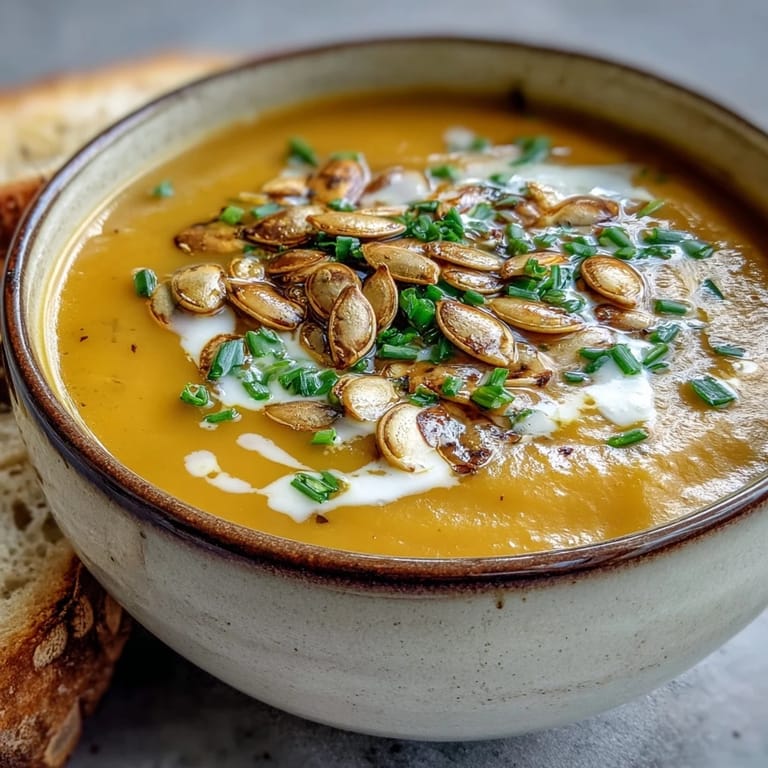
- Toasted pumpkin seeds and fresh chives: The garnish transforms each spoonful with little bursts of texture and color.
Tired of Takeout? 🥡
Get 10 meals you can make faster than delivery arrives. Seriously.
One email. No spam. Unsubscribe anytime.
Instructions
- Get your squash ready:
- Heat your oven to 400°F and line a baking sheet with parchment paper so cleanup is easier later. This small step saves you from scrubbing forever.
- Roast the acorn squash:
- Brush the cut sides with olive oil—this is what creates that slight caramelization that makes everything taste better—then place them cut side down and roast for 30 to 35 minutes until the flesh is so tender a fork slides through it easily. You'll know it's ready when the kitchen smells almost sweet and slightly nutty, and the edges of the squash have turned a deeper golden color.
- Build your flavor base:
- While the squash cools just enough to handle, heat your remaining olive oil in a large pot over medium heat and add the onion, carrot, and garlic. Sauté them for 5 to 7 minutes, stirring occasionally, until they soften and the kitchen smells like the beginning of something good.
- Combine everything:
- Scoop the roasted squash flesh away from the skin—it should come away effortlessly—and add it to the pot along with your vegetable broth, water, salt, pepper, nutmeg, and cinnamon. Bring this to a boil, then lower the heat and let it simmer quietly for about 10 minutes so all those flavors get to know each other.
- Blend to silky smoothness:
- This is where an immersion blender becomes your best friend because you can blend right in the pot without transferring anything, but a regular blender works too if that's what you have. Blend until there are no visible pieces, until it's genuinely smooth like velvet.
- Finish with cream:
- Stir in your heavy cream or coconut milk, taste, and adjust the salt and spices to your preference—sometimes it needs just a tiny bit more nutmeg to shine. Heat gently if it's cooled down, but don't let it boil.
- Serve with celebration:
- Ladle into bowls and scatter toasted pumpkin seeds and fresh chives over the top if you want that extra layer of texture and color. A small drizzle of cream swirled on top makes it look restaurant-quality.
 Save to Pinterest
  Save to Pinterest
 A friend once told me she made this soup when her kids were sick and wouldn't eat anything else, and somehow the spices and creaminess got them through a rough week. That's when I realized this wasn't just comfort food for cold afternoons—it was actually healing in a quiet, unpretentious way.
Why Roasting Changes Everything
The decision to roast instead of boil seems small until you taste the difference, which is honestly night and day. Roasting brings out a caramelized sweetness that boiling can never achieve, and it also removes excess moisture so your soup ends up rich and concentrated rather than thin and watery. I learned this the hard way when I tried boiling a squash to save time, and the whole pot tasted like disappointment.
Customizing Your Soup
This recipe is more of a foundation than a strict formula, and I've learned that the beauty of it is how it adapts to what's in your kitchen. I've added a pinch of cayenne when I wanted something with personality, swapped the cinnamon for ginger when I was feeling experimental, and once even stirred in a spoonful of tahini for earthiness. The core remains the same—roasted squash, aromatics, stock, and cream—but everything else is flexible enough to work with your mood and pantry.
- A splash of apple cider vinegar at the end brightens everything and adds complexity without making it taste sour.
- If you prefer it thinner, add more broth until it reaches your ideal consistency rather than forcing it thicker.
- Leftover soup freezes beautifully for up to three months, which means you can make a giant batch and have easy meals waiting.
Pairing and Serving Ideas
This soup works as a starter before a main course, but it also becomes a complete meal when you serve it with crusty bread and a simple salad alongside. I've served it at dinner parties as an elegant first course and in mugs as a cozy afternoon pick-me-up, and it somehow works for both occasions. The warm spices and natural sweetness feel grounding enough to stand alone, though crusty bread is truly the perfect companion because it gives you something to soak in that last, best spoonful at the bottom of the bowl.
 Save to Pinterest
  Save to Pinterest
 This soup has become one of those recipes I return to not because it's complicated, but because it never disappoints and somehow always feels like what I needed. It's the kind of food that asks very little but gives generously back.
Recipe Questions & Answers
- → Can I make this soup ahead of time?
Yes, this soup stores beautifully in the refrigerator for up to 4 days. Reheat gently on the stovetop, adding a splash of broth if needed to adjust consistency. You can also freeze it for up to 3 months in airtight containers.
- → What can I substitute for acorn squash?
Butternut squash is an excellent substitute with a similar sweetness and texture. You can also use kabocha or delicata squash. Adjust roasting time based on the size and thickness of your chosen squash variety.
- → How do I make this soup vegan?
Simply replace the heavy cream with full-fat coconut milk or cashew cream. The coconut milk adds a subtle tropical note that complements the squash beautifully while maintaining the creamy texture.
- → Can I use pre-cut squash to save time?
Absolutely! Pre-cut acorn or butternut squash cubes work well and eliminate the need for cutting and seeding. You may need to adjust roasting time slightly, checking for tenderness after 20-25 minutes.
- → What makes this soup so smooth?
The combination of roasting the squash until very tender and thoroughly blending creates the silky texture. Using an immersion blender allows you to blend longer without transferring hot liquid, resulting in an ultra-smooth consistency.
- → How can I add more depth to the flavor?
Try adding a tablespoon of maple syrup or brown sugar to enhance the natural sweetness, or incorporate fresh ginger for warmth. A splash of apple cider or white wine during sautéing also adds wonderful complexity.